In the Fast-Moving Consumer Goods (FMCG) industry, consumer loyalty is notoriously difficult to secure. Products are purchased frequently, switching costs are practically non-existent, and supermarket shelves are crowded with competitors competing fiercely on price. In this environment, a consumer might buy your brand’s shampoo today but effortlessly switch to a competitor’s promotion tomorrow.
For decades, FMCG brands have relied on points-based loyalty programs to encourage repeat purchases. However, as consumers suffer from “app fatigue” and digital clutter, these traditional programs are losing their impact. True loyalty is no longer built solely on points and discounts; it is built on consistent, personalized, and effortless engagement. This is where AI-powered chat agents are redefining FMCG loyalty, transforming passive buyers into active brand advocates through always-on, conversational interactions.
Why Loyalty is FMCG’s Hardest Problem
The fundamental challenge of FMCG loyalty lies in the nature of the products themselves. Unlike purchasing a car or a smartphone, buying soap, snacks, or beverages is a low-involvement decision. Consumers are driven by convenience, availability, and immediate needs. If a preferred brand is out of stock or a competitor offers an attractive discount, the consumer will switch without hesitation.
Furthermore, FMCG brands traditionally have a disconnected relationship with their end consumers. Because products are primarily sold through third-party retailers and distributors, brands lack direct access to consumer data and purchasing habits. Without this direct line of communication, building a meaningful, personalized relationship that fosters long-term loyalty is incredibly challenging.
The Limitations of Traditional Loyalty Programs
To bridge this gap, many FMCG brands have launched proprietary loyalty apps. The premise is simple: buy the product, scan the receipt, earn points, and redeem rewards. However, the reality is often disappointing.
Consumers are reluctant to download yet another app for a product they buy routinely. Even when they do enroll, engagement drops quickly. The process of scanning receipts or navigating complex redemption portals introduces friction. When the effort required to participate outweighs the perceived value of the rewards, the loyalty program fails to influence purchasing behavior, resulting in low redemption rates and stagnant ROI for the brand.
How AI Chat Agents Power Conversational Loyalty
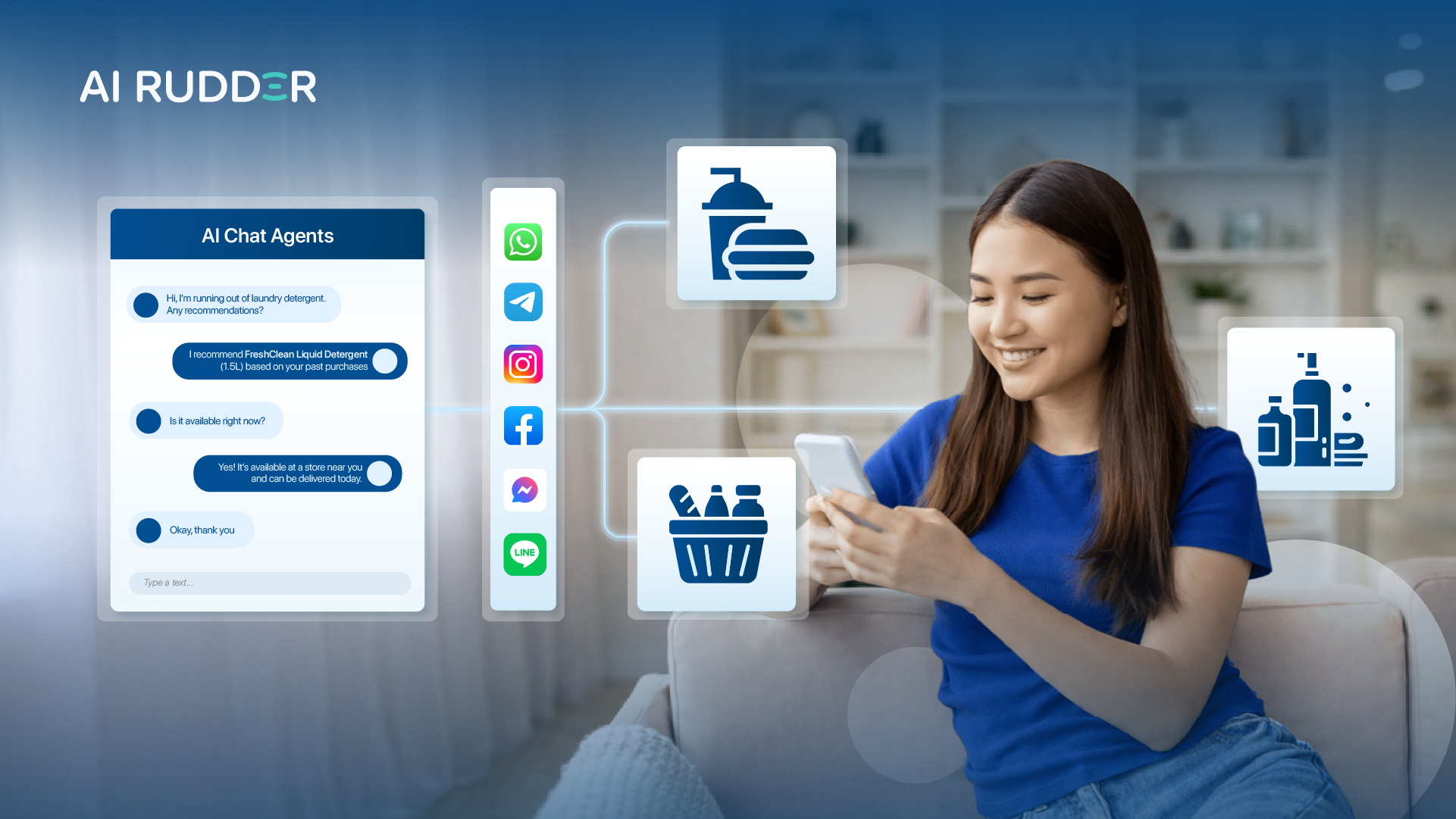
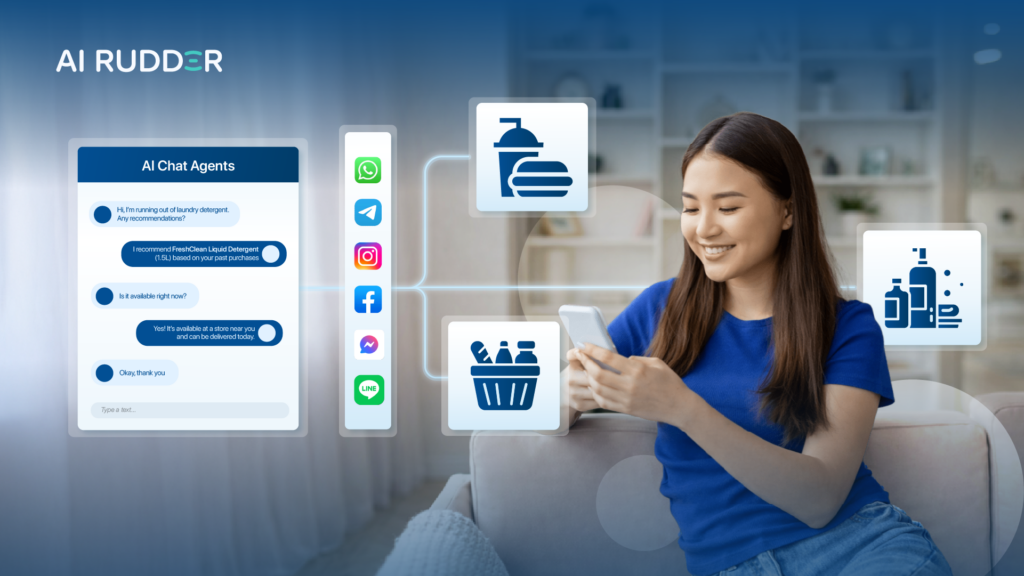
AI-powered chat agents offer a frictionless alternative by bringing the loyalty program directly to the platforms consumers already use daily, such as WhatsApp, LINE, or Facebook Messenger. There is no app to download and no new interface to learn.
Through conversational AI, loyalty becomes an interactive experience. Consumers can simply send a message to the brand’s verified WhatsApp account to check their points balance, learn about new rewards, or participate in interactive campaigns. The AI agent can handle these inquiries instantly, 24/7.
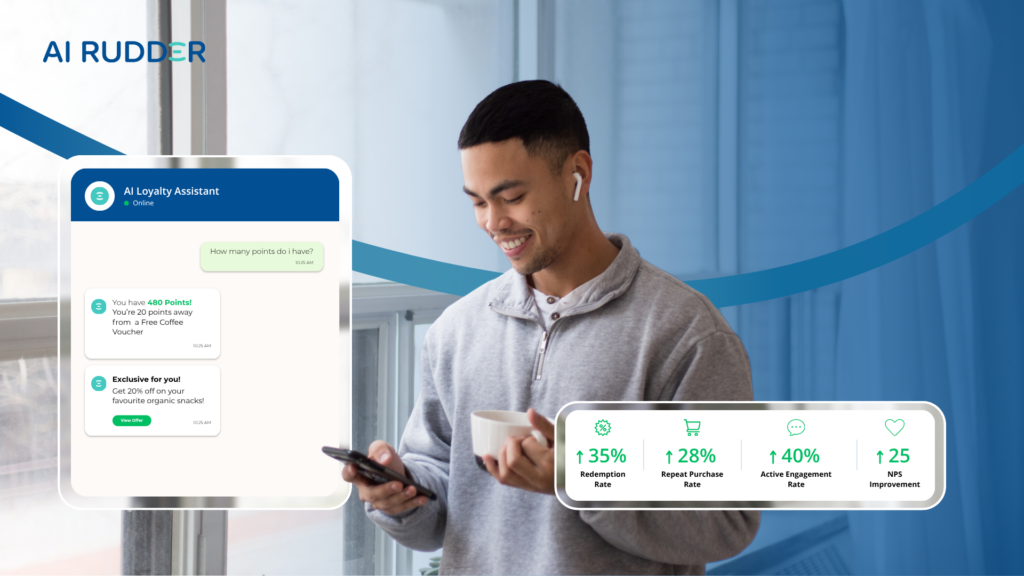
For example, a consumer might message the AI saying, “How many points do I have?” The AI instantly replies with the balance and proactively suggests, “You have enough points for a free coffee voucher. Would you like me to send it to you now?” This seamless, conversational approach removes friction and makes engaging with the loyalty program effortless and rewarding.
Integrating AI with Loyalty Programs for Real-Time Personalization
The effectiveness of conversational loyalty is amplified when the AI chat agent is integrated with the brand’s CRM and backend loyalty platforms. This integration allows the AI to access real-time consumer data, enabling highly personalized interactions.
Instead of generic mass communications, the AI can tailor its messaging based on the consumer’s purchase history and preferences. If the data shows a consumer frequently buys a specific line of organic snacks, the AI can proactively notify them of a relevant promotion or offer double points on their next purchase of that specific item. This level of personalization makes the consumer feel recognized and valued, strengthening their emotional connection to the brand.
Re-Engagement Campaigns: Using AI to Win Back Lapsed Consumers
AI chat agents are also powerful tools for re-engaging lapsed consumers. By analyzing purchase cycles, the system can identify consumers who haven’t interacted with the brand or redeemed points within an expected timeframe.
The AI can then initiate a targeted win-back campaign. It might send a friendly message saying, “We haven’t seen you in a while! Here’s a special 20% discount on your favorite products to welcome you back.” Because the message is delivered via a conversational channel like WhatsApp, it feels more personal and less intrusive than a promotional email, significantly increasing the chances of re-activation.
Measuring Loyalty Program Health
To ensure the success of AI-driven loyalty initiatives, FMCG brands must track metrics that reflect true engagement and behavioral change:
Redemption Rate: The percentage of earned points or rewards that are actually used by consumers. Conversational AI typically drives higher redemption rates by making the process easier.
Repeat Purchase Rate: Tracking whether engagement with the AI chat agent correlates with increased purchase frequency.
Active Engagement Rate: Measuring how often consumers interact with the chat agent beyond simple points inquiries (e.g., participating in polls, asking product questions).
Net Promoter Score (NPS): Gauging overall consumer sentiment and likelihood to recommend the brand based on their conversational experience.
By moving beyond transactional points programs and embracing AI-powered conversational engagement, FMCG brands can build deeper, more resilient loyalty that withstands the pressures of a highly competitive market.
Build Lasting Consumer Loyalty with AI Rudder
AI Rudder is a globally trusted conversational AI platform that helps FMCG brands create meaningful, always-on consumer relationships at scale. Our AI Chat Agent integrates seamlessly with the messaging platforms your consumers already use — including WhatsApp, LINE, and more — making it effortless for them to engage with your loyalty program without downloading a new app or navigating a complex portal.
With deep integration capabilities for CRM and loyalty platforms, AI Rudder enables real-time personalization that makes every consumer feel recognized and valued. Our multilingual support ensures consistent, culturally relevant engagement across all your markets, while our enterprise-grade security certifications — including SOC 2, ISO 27001, GDPR, and PDPA — ensure consumer data is handled with the highest level of protection.
Ready to transform your loyalty program from a passive points system into a dynamic, conversational brand experience? Contact AI Rudder today to schedule a demo and discover how our AI Chat Agent can help you build the consumer loyalty your brand deserves.
In the FMCG industry, the spotlight often falls on the end consumer. Brands invest heavily in optimizing the B2C shopping journey, ensuring products are visible, appealing, and accessible. However, behind every successful consumer purchase is a complex, often invisible B2B supply chain powered by a vast network of distributors, wholesalers, and retail partners.
Managing this network is historically labor-intensive. FMCG brands must coordinate with thousands of trade partners daily to process orders, confirm stock availability, share promotional updates, and manage payments. When this communication relies on manual processes, it creates operational bottlenecks that slow down the supply chain and frustrate trade partners. Today, forward-thinking FMCG brands are turning to AI-powered chat and voice agents to automate distributor communication, transforming their B2B operations from a reactive cost center into a streamlined, proactive engine.
The Complexity of FMCG Distributor Networks
The scale of an FMCG distribution network, particularly in diverse markets like Southeast Asia, is staggering. A single brand might rely on tens of thousands of mom-and-pop shops (warungs, sari-sari stores) alongside large modern retail chains.
Communication within this network is often fragmented. Sales representatives and distributors exchange information across a mix of phone calls, SMS, WhatsApp messages, and emails. This unstructured communication leads to several critical pain points:
Order Processing Delays: Manual order entry is slow and prone to human error, leading to delayed shipments and stockouts at the retail level.
Information Asymmetry: Distributors often struggle to get real-time answers about stock availability or the status of their deliveries, forcing them to constantly follow up with brand representatives.
Sales Rep Burnout: FMCG field sales teams spend an inordinate amount of time acting as customer support for distributors—answering routine queries rather than focusing on strategic relationship building and expanding market share.
What Distributors Actually Need
To streamline the B2B supply chain, it is essential to understand what distributors and trade partners actually need from FMCG brands. Their requirements are highly transactional and time-sensitive:
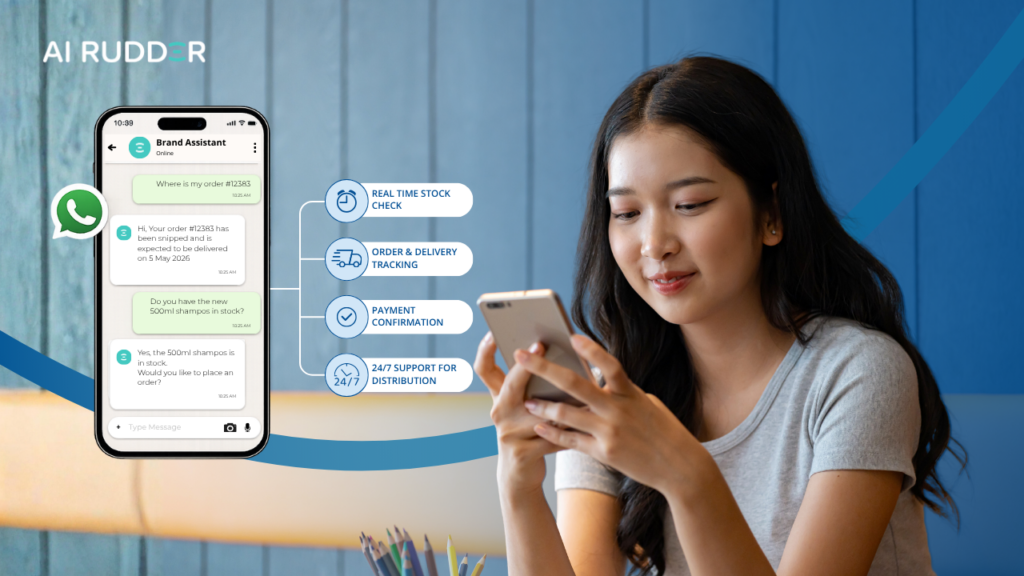
Instant Order Status: They need to know exactly when their inventory will arrive.
Real-Time Stock Checks: Before placing an order, they need confirmation that the products are available in the warehouse.
Clear Promotional Updates: They need to understand current trade promotions, volume discounts, and how to apply them to their orders.
Payment Confirmations: They require immediate acknowledgment when a payment is received and processed.
When these needs are met quickly and accurately, the distributor can operate more efficiently, which directly translates to higher sales volumes for the FMCG brand.
How AI chat agents handle distributor inquiries 24/7
AI-powered chat agents offer a scalable solution to the distributor communication bottleneck. By deploying an intelligent chatbot on platforms that distributors already use heavily, such as WhatsApp, FMCG brands can provide a 24/7 self-service channel for their trade partners.
Unlike simple, menu-driven bots, advanced AI chat agents use Natural Language Understanding (NLU) to comprehend complex queries. A distributor can simply message the brand’s verified WhatsApp account and ask, “Where is my order #12345?” or “Do you have the new 500ml shampoo in stock?” The AI agent instantly retrieves the information and responds conversationally. This immediate access to information eliminates the need for the distributor to call a sales rep or wait for business hours to get an answer.
Automating Order Confirmation and Delivery Tracking
One of the most impactful use cases for AI in B2B FMCG is the automation of order management workflows. When a distributor places an order, the AI agent can immediately send an automated confirmation message via chat or voice, summarizing the order details and providing an estimated delivery date.
As the order moves through the supply chain, the AI can proactively send tracking updates. If there is a delay due to logistics or weather, the AI can notify the distributor in real-time, managing expectations and preventing frustrated follow-up calls. Furthermore, AI voice agents can be utilized to make automated outbound calls to confirm large or complex orders, ensuring accuracy before the goods are dispatched.
Integrating AI with ERP and Inventory Systems
For an AI agent to be truly effective in a B2B order management, it must be deeply integrated with the FMCG brand’s backend systems, such as their Enterprise Resource Planning (ERP) software and inventory management databases.
This seamless integration is what transforms the AI from a simple answering machine into a powerful operational tool. When a distributor asks about stock availability, the AI queries the ERP system in real-time to provide an accurate answer. If the distributor wants to place a repeat order, the AI can access their purchase history, apply any relevant trade discounts, and inject the new order directly into the ERP system for processing, completely bypassing manual data entry.
Measuring Impact: Efficiency and Satisfaction
FMCG brands that automate distributor communication with AI can measure the impact on their B2B order management performance across several key operational metrics:
Order Processing Time: The speed at which an order moves from placement to fulfillment is significantly reduced when manual entry is eliminated.
Support Ticket Deflection: The volume of routine inquiries handled by the AI, freeing up sales reps and B2B support teams.
Sales Rep Productivity: Tracking the shift in sales reps’ activities from administrative support to proactive selling and account management.
Distributor Satisfaction: Improved NPS and satisfaction scores from trade partners who appreciate the faster, more reliable communication.
By leveraging AI to automate distributor communication, FMCG brands can build a more resilient, responsive supply chain. It empowers trade partners with the information they need instantly, reduces operational friction, and allows the brand’s human workforce to focus on driving growth rather than managing logistics.
Streamline Your Distributor Network with AI Rudder
AI Rudder is a leading conversational AI platform trusted by 500+ enterprises across diverse industries, including FMCG, to automate complex, high-volume B2B and B2C interactions. Our AI Chat Agent and AI Voice Agent seamlessly integrate with your existing ERP, CRM, and inventory systems, enabling real-time, accurate communication with your entire distributor network — 24 hours a day, 7 days a week.
From instant order confirmations and delivery tracking to promotional updates and payment inquiries, AI Rudder empowers your trade partners with the information they need, precisely when they need it. Our multilingual capabilities ensure consistent communication across all markets, while our enterprise-grade security infrastructure — certified under SOC 2, ISO 27001, and PDPA — keeps your business data protected at every step.
Ready to eliminate communication bottlenecks and build a more efficient, responsive supply chain? Contact AI Rudder today to schedule a demo and discover how our AI agents can transform your distributor relationships.
Every year, the FMCG industry gets more crowded. New brands keep emerging, products become more similar, and consumers have more choices than ever before. In the midst of these conditions, the brands that can truly excel are not just those with the best prices or the most exciting promotions, but those that can understand their consumers’ expectations and build consistent relationships.
Because, eventually, loyalty comes from experience, from how consumers feel heard, understood, and well-treated every time they interact with a brand. It’s more than just temporary discounts or bundles.
This is where the role of AI begins to become clear. AI serves as a bridge that helps brands stay close to their consumers, even on a large scale. Through faster, more relevant, and personal conversations, AI makes brand-consumer interactions feel more natural and not just transactional. The result? Consumers can feel more “connected” to the brand, and the relationships built are stronger in the long run.
Why Loyalty Matters More Than Ever in FMCG
Now, loyalty is one of the most crucial factors in the FMCG industry. This is because products from different brands are becoming increasingly similar over time, so what keeps consumers coming back isn’t just about taste or packaging, but the experience they have every time they interact with the brand. Loyalty itself is usually visible in two ways: customers who keep buying again, and those who voluntarily recommend the product to others.
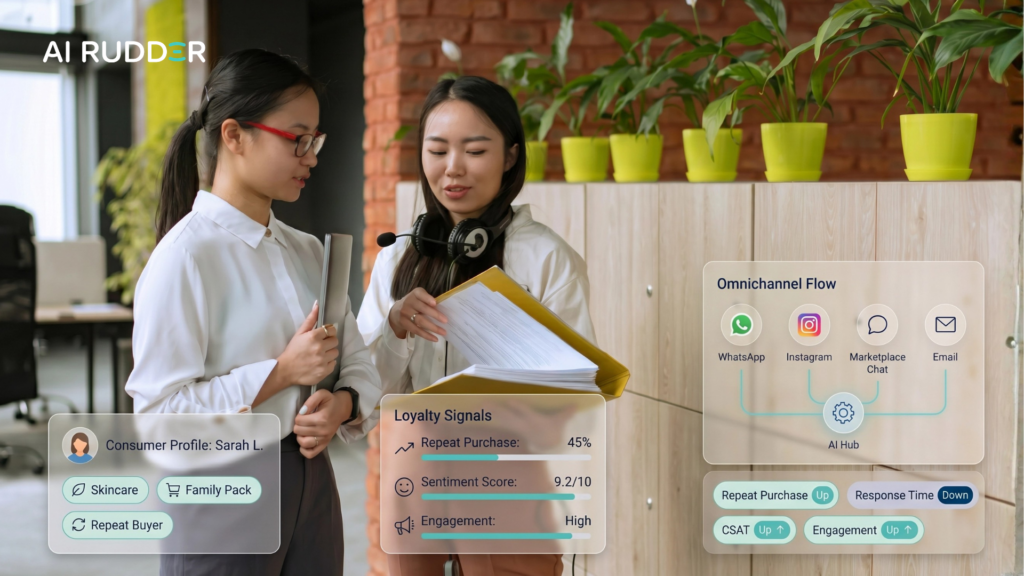
But to build that much loyalty, there are quite a few challenges. FMCG consumers are typically massive in number, they come from various channels, and the feedback they provide is widespread, ranging from social media, marketplace comment sections, to email. Therefore, brands need a way to keep all those interactions neat, readable, and quickly actionable, so that no customer feels ignored or unheard.
How AI Helps Build Stronger Consumer Loyalty
One of the biggest things that makes AI influential in terms of loyalty is its ability to deliver hyper-personalized conversations on a large scale. AI can remember consumer preferences, transaction history, and even their shopping patterns. So every time a consumer comes in, they don’t get a generic answer, but relevant recommendations tailored to their habits. Personal interactions like this make customers feel truly “understood”, and that becomes the initial foundation for loyalty to form.
Additionally, AI allows brands to be available 24/7. Quick and consistent responses, whether it’s simple questions or product complaints, make consumers feel the brand can be relied on at any time. This constant speed and presence builds trust, and trust is the first step in making consumers comfortable staying with a brand for longer.
AI also helps brands listen to consumers more seriously. With many different channels, from social media to marketplaces, feedback is often scattered and difficult to organize. AI can collect everything, identify frequently occurring complaints, see trends, and even read sentiment. When a brand can quickly improve based on that insight, consumers feel their opinions are valued.
Equally important, AI can predict needs before consumers even have a chance to ask. For example, detecting when they need a repeat order or when their stock might be running low. AI can provide recommendations or reminders that feel proactive, not like pushy sales. This makes the brand look helpful, and consumers feel more comfortable continuing to interact.
AI is also changing FMCG communication from being one-way to two-way. A brand doesn’t just speak through advertising, but can truly converse with consumers. They can ask questions, share experiences, or get information directly. This two-way conversation gives consumers a stronger sense of belonging, fostering emotional loyalty that goes beyond just promotions.
Then, AI also makes the brand experience more consistent across channels. There’s no longer a different answer between IG, WhatsApp, and email. The tone, voice, and accuracy remain the same regardless of where the consumer comes from. Consistency like this provides a sense of security and credibility, which is incredibly important for building long-term relationships.
And finally, AI helps brands provide value beyond just discounts or points. Thru quick information, usage tips, recipe ideas, or truly relevant product recommendations, consumers benefit every time they interact. Loyalty built on everyday values like this is far stronger than loyalty that only appears during promotions.
Real Examples of Loyalty Impact
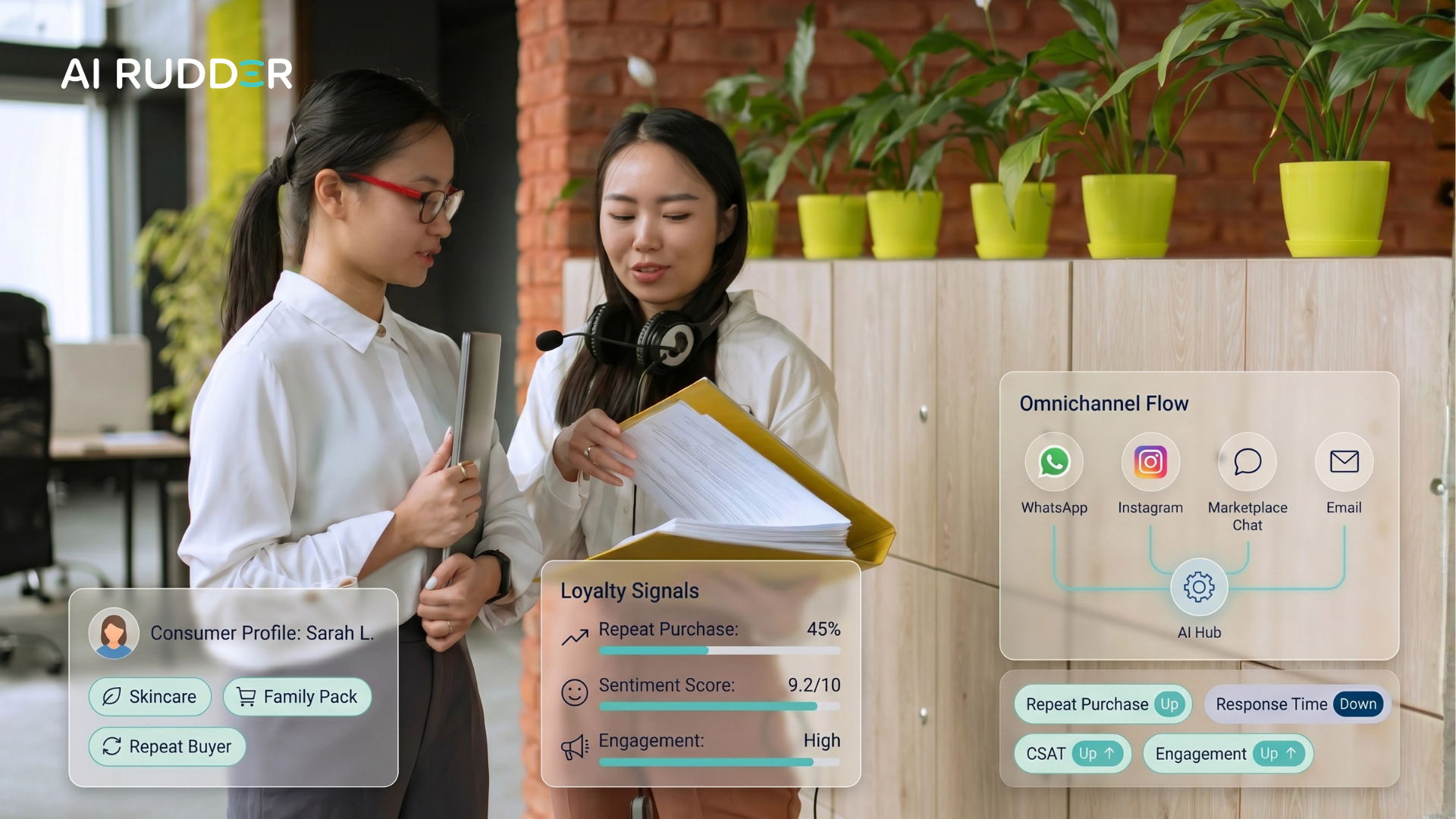
In its implementation, the effect of AI on loyalty is also clearly seen in the numbers that emerged after brands began optimizing conversations with their consumers. For example, many FMCG brands are seeing an increase in repeat purchases because consumers feel their interactions are more personal and help them choose products that match their preferences. Some brands also saw a significant decrease in CS response time, from taking hours to respond to complaints initially, to just seconds thanks to automated support that remains accurate. Additionally, engagement rates on channels like WhatsApp, Instagram, or e-commerce chat have also increased, as consumers feel more comfortable asking questions and interacting when brand responses are fast, relevant, and consistent.
These outcomes are usually an early indicator that the brand-consumer relationship is strengthening, and that the presence of AI not only simplifies operations but also truly impacts trust, convenience, and repeat purchase decisions.
Loyalty Grows When Every Interaction Matters
In the end, loyalty is born from thousands of small moments, from every quick conversation, every recommendation that feels right, and every complaint that is taken seriously. Consumers aren’t loyal just because of promotions or discounts, they’re loyal because of consistent experiences that make them feel valued.
Conversational AI helps brands deliver that experience every day, on a scale that was previously almost impossible to achieve manually. AI becomes the bridge that makes interactions feel more personal, more relevant, and more human, even tho they occur across various channels and with millions of consumers.
Brands that can build closeness through AI, and maintain the quality of that experience sustainably, will be the winning brands in the long run. It’s not just because they’re efficient, but because they’ve successfully built meaningful relationships with their customers.
Start Building Stronger Consumer Loyalty With AI
With AI Rudder, FMCG brands can start building faster, smarter, and more personalized consumer experiences—all within a single platform. Ready to transform the way your brand talks to consumers? Let’s try AI Rudder today.
Understanding consumer behavior and preferences is no longer just a competitive advantage in the FMCG industry, it is a must. Every day, consumers leave a digital footprint through their interactions with brands, including social media comments and online searches. However, how can businesses effectively capture and use this data?
AI is now presented as an innovative solution that allows FMCG brands to listen to and understand consumers in ways that were previously impossible. This technology not only collects data but also converts it into actionable insights, allowing businesses to develop more meaningful relationships with their consumers.
Listening at Every Consumer Touchpoint
Consumers in today’s world interact with brands through a variety of channels. From mentions on social media, product reviews on e-commerce platforms, to questions asked through consumer service. The biggest challenge for companies is bringing all these scattered conversations together into a cohesive understanding.
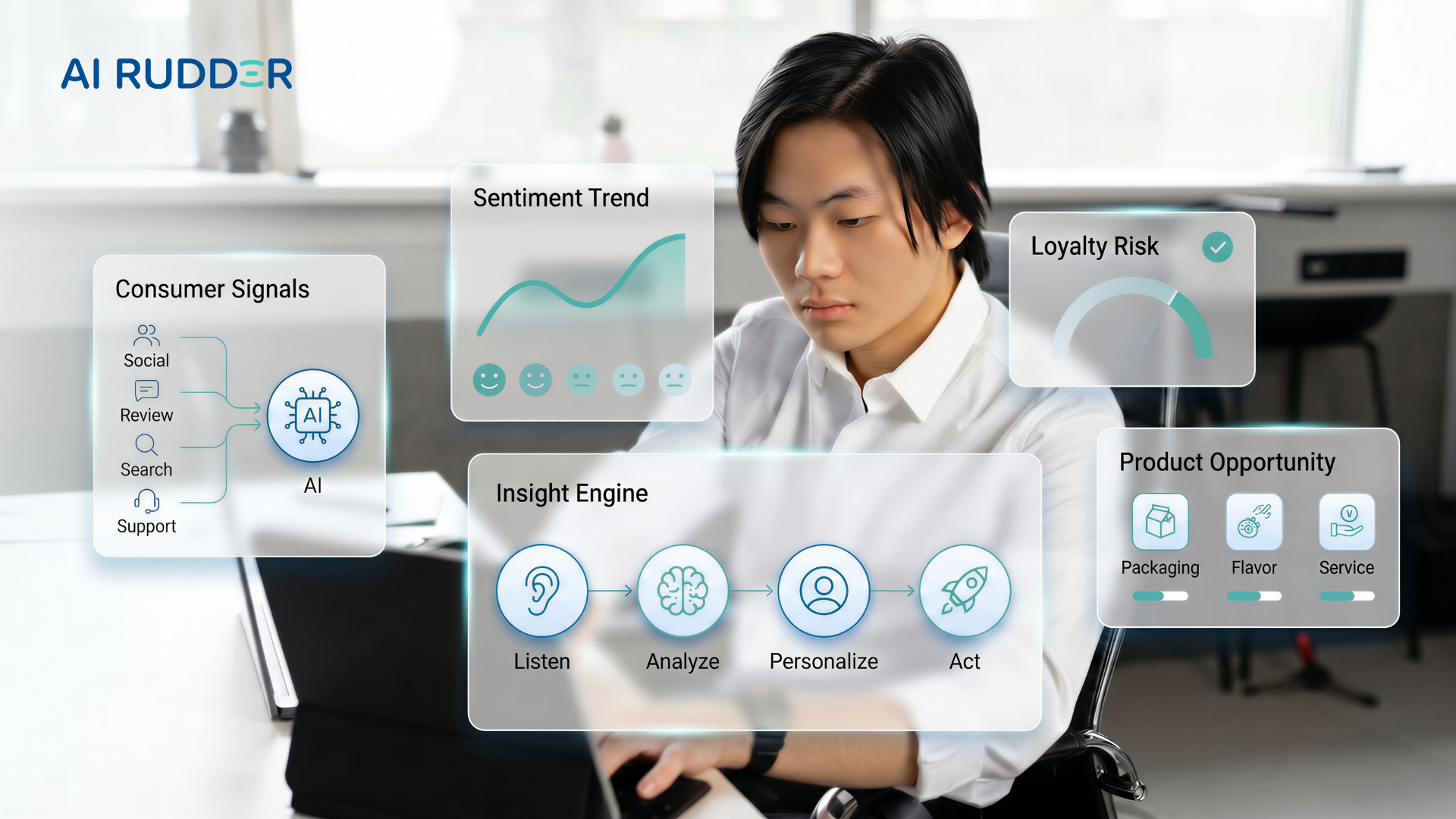
AI can monitor and analyze brand-related conversations in real time across multiple platforms. Natural language processing technology can understand the context and sentiment behind each interaction, identify patterns, and highlight emerging issues. What differentiates AI from traditional approaches is its ability to process massive volumes of data at speeds that human teams cannot possibly achieve.
More importantly, the system learns and adapts over time. With each new interaction, the AI gains a deeper understanding of language nuances, consumer preferences, and evolving trends. This creates a continuous learning cycle that allows brands to remain relevant and responsive to changing market needs.
Why Raw consumer Data Means Nothing Without AI Interpretation
Raw consumer data will be meaningless without the ability to transform it into practical strategies. This is where AI truly shows its value. The system not only identifies what consumers are saying, but also understands why they are saying it and what they actually need.
For example, when consumers repeatedly mention difficulties using product packaging, AI can identify this pattern and classify it as an area for improvement. Similarly, when there is consistent demand for specific flavor variations, the system can recommend new product development opportunities.
This insight serves as a strong foundation for strategic decision-making. The marketing team can design more targeted campaigns, the product development team receives valuable input for innovation, and the consumer service team can anticipate and prepare solutions for frequently asked questions.
Creating Personalized Experiences
Modern consumers expect personalized and relevant experiences. They want to feel understood as individuals, not just as numbers in a database. AI enables FMCG brands to meet these expectations by providing interactions tailored to each consumer’s preferences and behavior.
By analyzing previous purchase patterns and interactions, the system can recommend products that best match consumer preferences. This personalization not only increases sales conversions but also builds long-term loyalty. consumers feel valued and understood, which ultimately strengthens their emotional connection with the brand.
What sets AI-based approaches apart is their scale. Personalization can be delivered to millions of consumers simultaneously, with a consistently high level of relevance. This is a level of engagement that was previously impossible to achieve with traditional methods.
Building Long-Term Relationships with Consumers
The true value of AI in consumer engagement lies in its ability to foster lasting relationships. By analyzing behavioral patterns, AI can identify changes in preferences and provide recommendations tailored to the consumer’s stage in their relationship with the brand. The system anticipates future needs as well as current ones.
For example, when a consumer consistently buys baby care products, the system can anticipate their next needs that might arise as the child grows. Or when there’s a decrease in purchase frequency, the system can identify churn risk and recommend appropriate interventions.
This proactive approach shifts the brand-consumer relationship dynamic from transactional to relational. Consumers not only feel served, but truly understood and valued. This is the foundation for building a loyal and engaged brand community.
Closing the Loop with Real Action
The most important of all the insights gathered is the ability to follow them up with real action. AI empowers brands to not only understand consumers but also respond in a meaningful and timely manner.
Every insight generated by the system must be linked to particular actions, such as product enhancements, communication changes, or the creation of new services. Cross-functional teams can collaborate based on consistent and reliable data, ensuring that the entire organization is moving in the same direction to meet consumer demands.
The most interesting aspect is that AI allows brands to measure the impact of each intervention in real-time. Companies can see directly how changes made based on consumer insights affect engagement and loyalty, resulting in a continuous improvement cycle that drives innovation and growth.
Turning Every Consumer Insight Into Long-Term Loyalty
In a rapidly changing world, the ability to understand and respond to consumer needs is a key differentiator between successful and struggling brands. AI enables us not only to listen but also to truly understand the consumer’s voice, and, more importantly, to act on that knowledge.
FMCG brands can use this technology to develop deeper and more meaningful relationships with their consumers. The result was not only a short-term sales increase, but also a strong foundation for sustainable growth in the future. This is the new era of consumer-centricity, where every interaction is an opportunity to strengthen relationships and foster lifelong loyalty.
Transform Consumer Data into Your Growth Engine
Stop letting valuable consumer insights slip through the cracks. AI Rudder turns every interaction, from social media conversations to purchase history, into a strategic roadmap for unprecedented growth. Contact us for more details.
The fragmentation of shopping platforms, from offline to online stores, has created a disconnected everyday shopping experience. As the digital landscape advances, the expectation for a convenient, consistent, and connected shopping experience has become the new baseline. According to Capgemini (2025), approximately 71% of shoppers expect Generative AI to play a key role in their purchasing journey, signaling a major shift in how FMCG brands must engage with their audience. They want to browse, compare, purchase, and reorder seamlessly across channels, yet they still often face gaps between their online and offline experiences. In the fast-paced FMCG industry, this lack of synchronicity not only disrupts the customer experience, but also limits the brand’s ability to build long-term loyalty and repeat purchases.
AI-powered omnichannel enables FMCG brands, to move beyond simply being present across multiple channels towards creating an integrated ecosystem where every interaction is connected. With this approach, consumers can navigate from apps, websites, social media, to brick-and-mortar stores without friction or repetition. All interactions feel unified and relevant at every step.
A New Necessity for Today’s FMCG Landscape
In today’s FMCG landscape, the meaning of omnichannel needs to be redefined. Previously, companies operated in multichannel model, with channels such as websites, apps, and physical stores functioning separately. What brands truly need now is an omnichannel experience, where all channels are integrated, synchronized, and powered by shared data. With omnichannel, consumers can check in-store inventory through an app, use the same loyalty points for both online and offline purchases, and receive personalized product recommendations wherever they interact. At its core, AI-powered omnichannel is about delivering a truly seamless and consistent experience for consumers, regardless of the channel they use.
This transformation is crucial due to the unique characteristics of the FMCG industry. Products such as soap, shampoo, or snacks have a fast, frequent, and routine purchasing cycle, while consumer loyalty tends to be low and brand switching happens effortlessly. Consumers also have high expectations for convenience, speed, and stock availability, amidst intense price competition. In this landscape, implementing an omnichannel strategy is no longer just an option, but a necessity to retain customers and remain competitive.
Reinventing the FMCG Industry with Intelligent Omnichannel Experiences
One example of AI-powered omnichannel in the FMCG industry is the use of virtual shopping assistants available 24/7. Chatbot services integrated into digital platforms enable consumers to engage in conversational interactions similar to communicating with a human. Consumers can ask questions, and the AI system will immediately respond with real-time information. The systems can handle a wide range of tasks, from answering FAQs and routine inquiries to checking product availability and efficiently processing orders.
Beyond automation, AI plays a key role in creating deeply personalized experiences. By analyzing conversations, purchase history, and consumption patterns, the system can provide relevant product recommendations. This capability is enhanced by contextual customer support, where AI can answer questions about product composition, usage instructions, and complaint handling with access to comprehensive customer data.
The most transformative aspect of AI-powered omnichannel is its ability to bridge the gap between online and offline shopping experiences. Consumers can take advantage of features like real-time stock checks, click-and-collect services, and personalized in-store navigation. This integration creates a truly seamless shopping experience across channels.
The Dual Impact of AI-Powered Omnichannel
AI-powered omnichannel offers significant benefits for both consumers and businesses. For consumers, it provides greater ease and convenience in their daily shopping experience. With an AI-powered omnichannel ecosystem, they can shop anytime, anywhere, and however they want, without barriers or limitations. They also enjoy a more personalized experience, feeling acknowledged and understood through tailored recommendations, promotions, and interactions. At the same time, AI helps them save time by providing instant information and enabling smooth and fast transactions across all channels.
For FMCG and retail brands, AI-powered omnichannel drives measurable business outcomes. This technology helps increase customer loyalty through consistent and satisfying experiences, making customers more likely to return. Relevant recommendations also drive increased conversions and increase average order value. Operationally, AI can automatically handle routine inquiries, reducing the burden on customer service teams and lowering operational costs. Furthermore, every interaction becomes a rich source of data and insights, providing a deeper understanding of consumer preferences and pain points for more strategic decision-making.
The Future of FMCG Begins with More Personal and Connected Interactions
It can be concluded that an omnichannel strategy powered by AI technology is no longer just a future trend, but has become a fundamental necessity in today’s FMCG industry. This digital transformation has successfully transformed transactional interactions into ongoing, personal relationships between brands and consumers.
Going forward, FMCG brands that want to remain competitive and relevant will need to view AI-powered conversations as a strategic distribution and engagement channel. The essence of everyday shopping no longer lies solely in the question of “where” consumers buy, but has shifted to “how” brands interact and build meaningful relationships with their consumers through every conversation.
Want to Elevate Your Brand with a Truly Intelligent and Seamless Omnichannel Experience?
Talk to our team today and unlock the full potential of intelligent, AI-powered omnichannel.
Want to elevate your brand with a truly intelligent and seamless omnichannel experience? Talk to our team today and unlock the full potential of AI-powered omnichannel with AI Rudder.
The fragmentation of shopping platforms, from offline to online stores, has created a disconnected everyday shopping experience. As the digital landscape advances, the expectation for a convenient, consistent, and connected shopping experience has become the new baseline. According to the latest report by Capgemini (2025), approximately 71% of shoppers expect Generative AI to play a key role in their purchasing journey, signaling a major shift in how FMCG brands must engage with their audience. They want to browse, compare, purchase, and reorder seamlessly across channels, yet they still often face gaps between their online and offline experiences. In the fast-paced FMCG industry, this lack of synchronicity not only disrupts the customer experience, but also reduces the brand’s opportunity to build long-term loyalty.
It’s time to implement AI-powered omnichannel in the FMCG industry, not just being present across multiple channels but ensuring each channel works as an integrated ecosystem. With this approach, consumers can navigate from apps, websites, social media, to brick-and-mortar stores without friction or repetition. All interactions feel unified and relevant at every step.
A New Necessity for Today’s FMCG Landscape
In the modern FMCG era, the meaning of omnichannel needs to be redefined. Previously, companies operated in multichannel model, with channels such as websites, apps, and physical stores functioning separately. What brands truly need now is an omnichannel experience, where all channels are integrated, synchronized, and powered by shared data. With omnichannel, consumers can check in-store inventory through an app, use the same loyalty points for both online and offline purchases, and receive personalized product recommendations wherever they interact. At its core, omnichannel is about delivering a truly seamless and consistent experience for consumers, regardless of the channel they use.
This transformation is crucial due to the unique characteristics of the FMCG industry. Products such as soap, shampoo, or snacks have a fast, frequent, and routine purchasing cycle, while consumer loyalty tends to be low and brand switching happens effortlessly. Consumers also have high expectations for convenience, speed, and stock availability, amidst intense price competition. In this landscape, implementing an omnichannel strategy is no longer just an option, but a necessity to retain customers and remain competitive.
Reinventing the FMCG Industry with Intelligent Omnichannel Experiences
One example of AI-powered omnichannel in the FMCG industry is the use of virtual shopping assistants available 24/7. Chatbot services integrated into digital platforms enable consumers to engage in conversational interactions similar to communicating with a human. Consumers can ask questions, and the AI system will immediately respond with real-time information. The systems can handle a wide range of tasks, from answering FAQs and routine inquiries to checking product availability and efficiently processing orders.
More than just a tool, AI also plays a role in creating deeply personalized experiences. By analyzing conversations, purchase history, and consumption patterns, the system can provide relevant product recommendations. This capability is enhanced by contextual customer support, where AI can answer questions about product composition, usage instructions, and complaint handling with access to comprehensive customer data.
The most transformative aspect of AI-powered omnichannel is its ability to bridge the gap between online and offline shopping experiences. Consumers can take advantage of features like real-time stock checks, click-and-collect services, and personalized in-store navigation. This integration creates a truly seamless shopping experience across channels.
The Dual Impact of AI-Powered Omnichannel
AI-powered omnichannel offers significant benefits for both consumers and businesses. For consumers, it provides greater ease and convenience in their daily shopping experience. With an AI-powered omnichannel ecosystem, they can shop anytime, anywhere, and however they want, without barriers or limitations. They also enjoy a more personalized experience, feeling acknowledged and understood through tailored recommendations, promotions, and interactions. At the same time, AI helps them save time by providing instant information and enabling smooth and fast transactions across all channels.
For FMCG and retail brands, AI-powered omnichannel delivers significant business impact. This technology helps increase customer loyalty through consistent and satisfying experiences, making customers more likely to return. Relevant recommendations also drive increased conversions and increase average order value. Operationally, AI can automatically handle routine inquiries, reducing the burden on customer service teams and lowering operational costs. Furthermore, every interaction becomes a rich source of data and insights, providing a deeper understanding of consumer preferences and pain points for more strategic decision-making.
The Future of FMCG Begins with More Personal and Connected Interactions
It can be concluded that an omnichannel strategy powered by AI technology is no longer just a future trend, but has become a fundamental necessity in today’s FMCG industry. This digital transformation has successfully transformed transactional interactions into ongoing, personal relationships between brands and consumers.
Going forward, FMCG brands that want to remain competitive and relevant will need to view AI-powered conversations as a strategic distribution and engagement channel. The essence of everyday shopping no longer lies solely in the question of “where” consumers buy, but has shifted to “how” brands interact and build meaningful relationships with their consumers through every conversation.
Want to Elevate Your Brand with a Truly Intelligent and Seamless Omnichannel Experience?
Talk to our team today and unlock the full potential of intelligent, AI-driven omnichannel
In the Fast-Moving Consumer Goods (FMCG) industry, consumer loyalty is notoriously difficult to secure. Products are purchased frequently, switching costs are practically non-existent, and…
In the FMCG industry, the spotlight often falls on the end consumer. Brands invest heavily in optimizing the B2C shopping journey, ensuring products are…
Every year, the FMCG industry gets more crowded. New brands keep emerging, products become more similar, and consumers have more choices than ever before.…
Understanding consumer behavior and preferences is no longer just a competitive advantage in the FMCG industry, it is a must. Every day, consumers leave…
The fragmentation of shopping platforms, from offline to online stores, has created a disconnected everyday shopping experience. As the digital landscape advances, the expectation…
The fragmentation of shopping platforms, from offline to online stores, has created a disconnected everyday shopping experience. As the digital landscape advances, the expectation…
January 27, 2026
We use cookies to improve your experience. By continuing to browse, you agree to our Privacy Policy.