Failed deliveries remain an ongoing issue for logistics companies, especially amidst increasing order volumes and customer expectations for fast shipping. Many cases occur due to simple issues such as incomplete addresses, difficult-to-map locations, or recipients who cannot be reached. As a result, the courier has to redeliver, costs increase, and customers become frustrated.
Beside data factors, delivery failures frequently happen due to a lack of coordination with customers. It’s not uncommon for couriers to arrive at a location only to find that the recipient is not there, or has moved without updating their shipping information. Without a verification process prior to delivery day, the risk of the package not arriving on the first attempt is significantly increased.
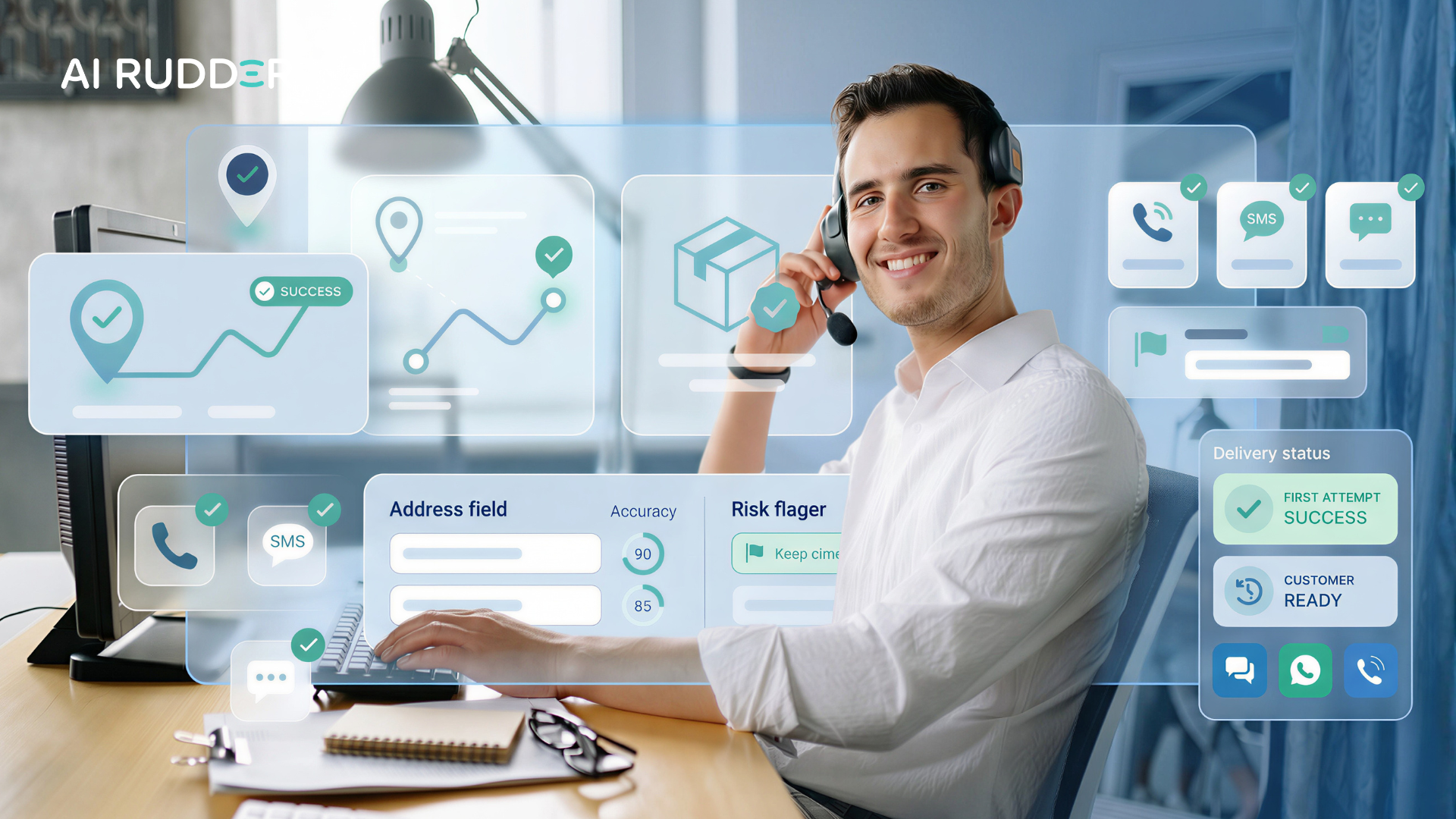
To address these challenges, AI-driven Delivery Verification provides a smarter and more proactive approach. Powered by intelligent automation, the system validates addresses, checks contact accuracy, and confirms customer readiness both before and during the delivery process. By ensuring cleaner data and maintaining real-time coordination with customers, businesses can significantly reduce failed deliveries while improving overall customer satisfaction.
Why Failed Deliveries Happen
Failed deliveries are frequently caused by a variety of small-scale factors. One of the main causes is incomplete addresses, incorrect formats, or addresses that are not clear enough for the logistics system to understand. When details like house numbers, landmarks, or building names are missing, the courier is more likely to take the wrong route or fail to find the delivery location.
The next problem arises when the recipient’s phone number cannot be reached. Inactive, incorrectly formatted, or unresponsive numbers make it difficult for couriers to quickly clarify issues encountered in the field; without valid contact information, the chances of a package failing to be delivered are significantly increased.
When customers are unaware of the delivery schedule, there’s a chance they won’t be present when the courier arrives. Without clear coordination, the courier has to redeliver or return the package, which increases operational costs and slows down the process.
What Is Automated Delivery Verification?
Automated Delivery Verification is an AI-based system that ensures every delivery detail is correct before a package is shipped. This technology works from validating addresses and checking contact eligibility to assessing whether the customer is prepared to receive the package. With a smarter approach, the previously manual and time-consuming verification process can now be done automatically and consistently.
AI within this system utilizes historical data, customer behavior patterns, and real-time context to detect potential delivery failures early on. For example, if an address appears ambiguous or a phone number frequently fails to respond, the system can flag the risk and initiate automatic verification via channels such as WhatsApp, SMS, or voice calls, making the verification process significantly faster and more accurate when compared to manual checks.
With its pattern detection and automated response capabilities, Automated Delivery Verification helps businesses reduce data errors, improve coordination with customers, and ensure every delivery has a higher chance of success on the first attempt.
Key Components of Delivery Verification
One important component in the info-checking process is address validation. This stage ensures that customer addresses are consistent, complete, and easily understood by the courier. With an accurate address, the likelihood of packages being redirected or lost is significantly reduced, making the shipping process more efficient.
Ensuring contact accuracy is also essential. An active and contactable phone number makes it easier for the courier when they need sudden confirmation, such as the exact location or the recipient’s condition: valid contact information helps to speed up the resolution of on-the-ground issues and reduces the likelihood of failed deliveries.
The last one is delivery readiness confirmation, which is an automated process to contact customers before delivery is made. Companies can reduce wasted delivery attempts by ensuring they are available at the scheduled time or rescheduling them. As a result, efficiency increased and the delivery success rate became higher.
How Automation Reduces Failed Deliveries
AI automation makes the process of collecting and verifying customer data much more accurate right from the start. Automated systems can check and standardize information in real time, ensuring that couriers do not encounter incorrect addresses or contacts. Valid data from the start helps ensure smoother deliveries.
AI automation also makes customers more prepared when the courier arrives. Customers can confirm their availability or reschedule if necessary by receiving automatic notifications or pre-shipment confirmation. This process reduces the likelihood of failed deliveries, which usually occur when the recipient is not present.
Ultimately, fewer reships mean a significant drop in operational costs. The courier doesn’t need to go back and forth, and the company can allocate resources more efficiently. All of this leads to a faster, clearer, and more drama-free customer experience.
Delivering Better Customer Experiences Through AI-Powered Verification
Ultimately, logistics companies can significantly reduce failed deliveries by automating the verification of critical information, from addresses and contact numbers to customer availability at the time of delivery. With AI validating information from the start and providing automatic confirmation before shipment, the process becomes far more accurate, faster, and efficient. As a result, customers receive their packages on time without friction, while also experiencing a smoother customer journey.
As customer experiences become increasingly positive and consistent, their trust in logistics services also increases. AI-based automation not only improves operational workflows but also builds long-term relationships with customers thru more reliable and proactive service.
Deliver Without Fail with AI Rudder
Automate your delivery verification with AI-driven address checks, contact accuracy, and customer readiness confirmation. Contact us today to learn more.
Behind every successful delivery is a complex logistics operation involving customer awaiting updates, warehouse teams preparing shipments, and driver navigating last-mile routes.
However, one of the biggest challenges in modern logistics operations lies in customer and internal communication.
As logistics network scale, fragmented communication leads to slower response times, inconsistent delivery updates, and operational inefficiencies. In an industry driven by speed and precision, this gap has become a costly roadblock.
This is where an “AI Chatbot for logistics” plays a critical role in enabling smarter, more connected delivery operations.
Turning Conversations Into Seamless Deliveries with Logistics Chatbots
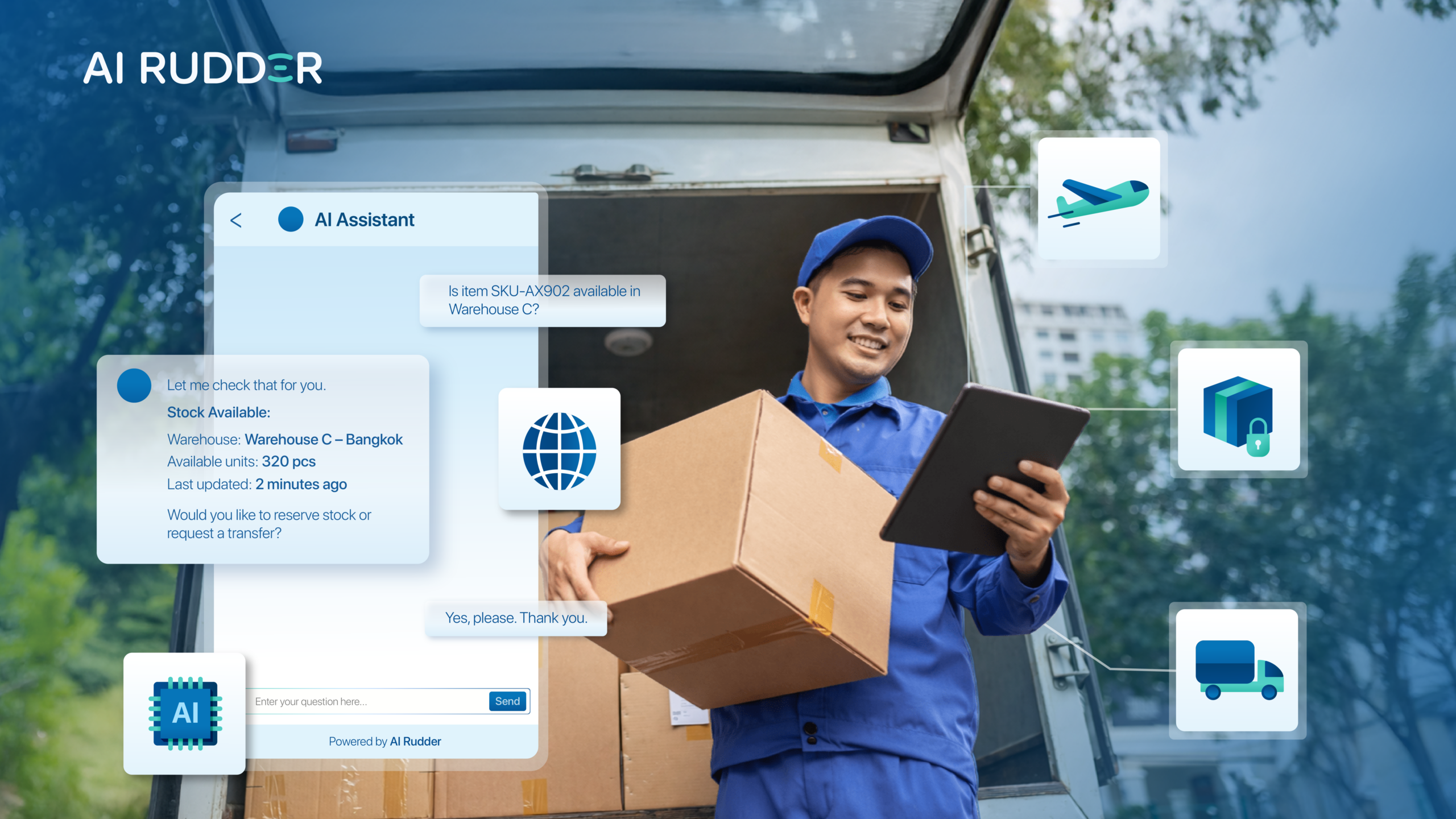
One of the benefits of AI chatbots in the logistics industry is that customers can get real-time updates on their package deliveries. Customers can also track their packages simply by asking the chatbot. Chatbots can also notify customers if their delivery is delayed or disrupted, so customers are not clueless about the whereabouts of their packages.
Chatbots also allow customers to ask questions at any time, because they are available 24/7 and will answer customer questions, from FAQs to simple questions, quickly and accurately. This can make customers feel more valued and heard. If a customer’s question is complex, the chatbot will transfer the chat to a human agent.
What makes chatbots so valuable in the logistics industry is not only their ability to respond to chats, but also their ability to integrate with company systems. When integrated with ERP, CRM, and delivery-tracking platforms, chatbots can access real-time data from multiple departments. This means that customers can see accurate delivery updates instantly, and internal teams can also monitor delivery progress without having to manually switch between dashboards.
Chatbots Improve Logistics Productivity and Decision-Making
Implementing AI chatbots in the logistics industry can significantly reduce human error and shorten response times. Furthermore, chatbots can reduce data entry and routine processing errors to near zero compared to manual methods. This minimizes routine workload and frequent operational errors.
It also contributes to increased transparency and customer satisfaction. Because chatbots can be programmed to provide real-time shipping updates and answer customer questions at any time, customers feel more engaged and the information they receive is more accurate. For example, research shows that adopting AI chatbots in logistics leads to significant improvements in delivery performance and customer satisfaction. With greater transparency and faster responses, customers tend to have more positive experiences, which ultimately strengthens customer loyalty and the company’s reputation.
With AI Rudder’s AI Chat Agent, logistics companies may implement these benefits at scale. AI Chat Agent seamlessly integrates with existing logistics systems to handle high-volume inquiries such as shipment tracking, delivery status, and order confirmation in real-time, without adding operational burden. This ensures consistent and accurate communication across various channels while maintaining full visibility into customer interactions and operational data.
As a result, internal teams can focus more on strategic decision-making rather than routine tasks. Because repetitive requests are handled automatically, human agents can focus their attention on higher-impact activities such as resolving complex shipping issues, optimizing logistics networks, and analyzing operational trends. This shift not only improves daily efficiency but also strengthens the organization’s ability to adapt, grow, and make data-driven decisions in an increasingly dynamic logistics environment.
The Future of Smart Logistics is AI-Powered and Real-Time
AI chatbots are now a key transforming force in the logistics industry, providing customers with more efficient and convenient shipping processes. Through messaging platforms like WhatsApp or other chat apps, customers can now schedule or change deliveries, alter destinations, and even place bulk orders with just a few clicks.
For logistics companies, the presence of chatbots not only helps speed up service but also streamlines operations and improves customer service quality. Interactions that previously required time and effort can now be automated, allowing internal teams to focus on strategic decision-making and improving the customer experience.
As the logistics industry continues to evolve toward a fully digital and real-time ecosystem, AI chatbots will play a crucial role in shaping the future of smarter, faster, and more connected last-mile delivery. Chatbots are not just tools, but a strategic part of the smart logistics ecosystem.
Make Logistics Simpler, Smarter, and More Connected
AI Rudder helps logistics companies automate customer communication, streamline delivery workflows, and improve real-time visibility across operations.
Contact us to see how AI Rudder empowers logistics teams to automate workflows, improve efficiency, and keep customers informed in real time.
Failed deliveries remain an ongoing issue for logistics companies, especially amidst increasing order volumes and customer expectations for fast shipping. Many cases occur due…
Behind every successful delivery is a complex logistics operation involving customer awaiting updates, warehouse teams preparing shipments, and driver navigating last-mile routes. However, one…
January 28, 2026
We use cookies to improve your experience. By continuing to browse, you agree to our Privacy Policy.