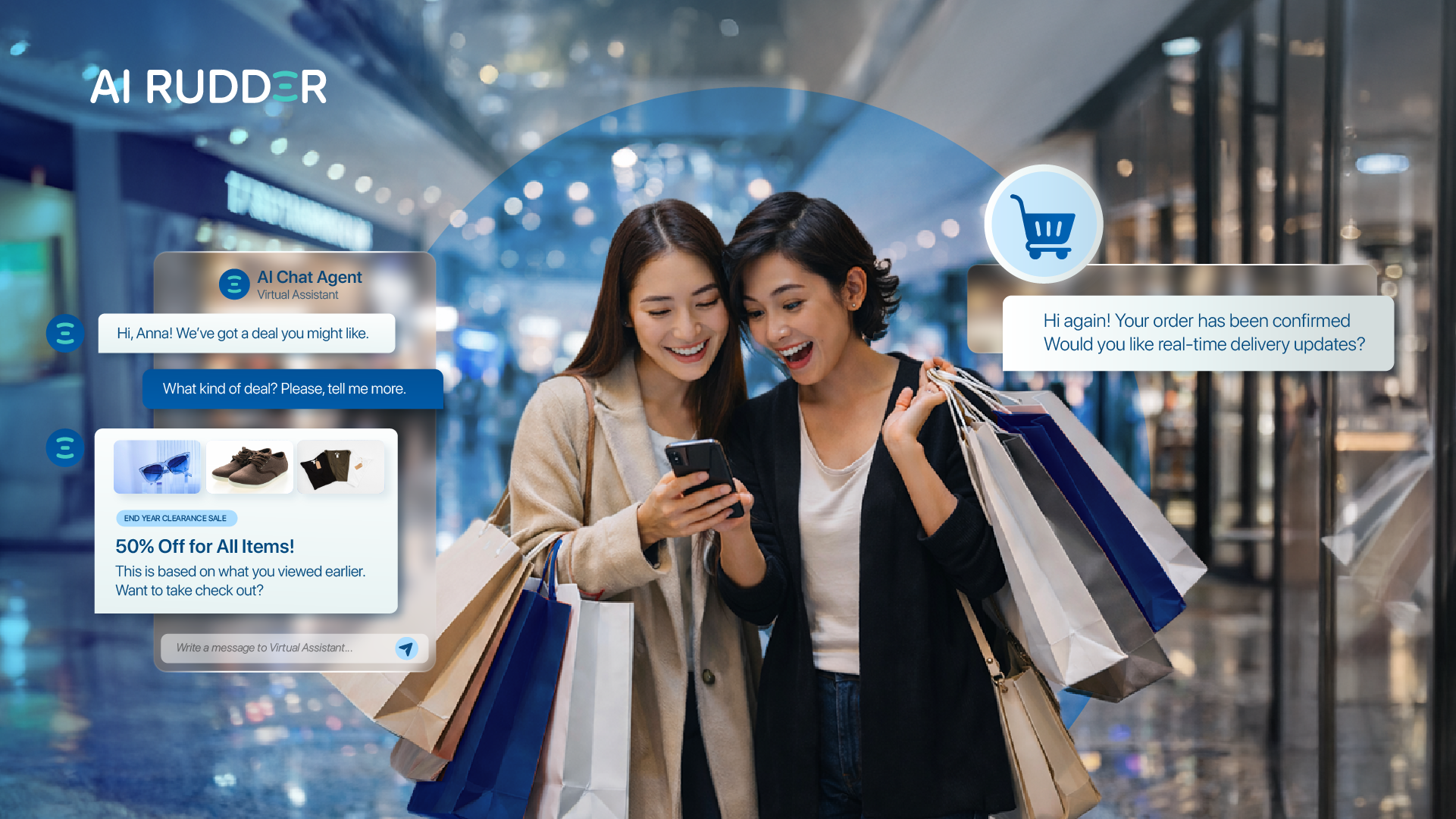
The retail landscape is changing rapidly, along with digital transformation. With more online shopping platforms popping up, customers expect faster responses, smoother experiences, and instant support at every stage of their journey. E-commerce as an online shopping platform is required to respond anytime and instantly. This is where chatbots step in as a key player in the digital shift.
More than just answering FAQs, AI-powered e-commerce chatbots support customers across the entire purchase journey, from checkout to post-purchase care. With the ability to understand context and detect emotions, their interactions feel increasingly human-like. Chatbots are now more than just automation tools: they are digital assistants that help make the customer experience smoother, smarter, and more connected.
Why E-Commerce Needs Chatbots More Than Ever
E-commerce, once celebrated for bringing convenience to shopping, now faces a new challenge, managing massive volume of repetitive customer inquiries at scale. Questions about order status, refunds, ongoing promotions, and product availability often flood customer service channels, slowing response times and stretching support teams thin.
Chatbots step in as powerful assistants to manage these repetitive interactions efficiently. By automating routine responses, they help reduce the workload on human agents while maintaining consistent, on-brand communication across every touchpoint.
Beyond efficiency, e-commerce chatbots offer reliability that human teams can’t always sustain. They operate around the clock, even during holidays or peak seasons, ensuring that customers receive instant answers anytime, anywhere. In doing so, they don’t just make support faster, but also make the overall shopping experience smoother and more dependable.
Enhancing Pre-Purchase Shopping Experience
Chatbots play a critical role in improving the pre-purchase experience acting as a reliable shopping companion. Before customers decide to check out, they often seek clarification about product details, stock availability, payment options, or shipping policies. Chatbots can instantly respond to these questions, helping shoppers make informed decisions without the frustration of waiting for human assistance.
Beyond answering queries, e-commerce chatbots can deliver personalized product recommendations based on customer preferences, browsing patterns, or purchase history. This personalized guidance makes customers feel more confident about their choices and less likely to abandon their carts. By blending convenience with relevance, chatbots help e-commerce companies build trust and drive higher conversion rates.
Supporting Seamless Post-Purchase Journey
Chatbots aren’t just transforming how customers shop, they’re also reshaping what happens after a purchase is made. Beyond assisting in the pre-purchase stage, chatbots play a key role in supporting the post-purchase journey, where speed and clarity matter most.
From providing real-time order tracking and refund updates to answering questions about delivery status, chatbots ensure that customers stay informed at every step. Instead of waiting in long queues for human agents, shoppers can get immediate responses within seconds, directly through the e-commerce platform.
This level of instant accessibility not only enhances customer satisfaction but also builds trust. When customers feel supported and informed even after checkout, they’re more likely to return, turning one-time buyers into loyal, repeat customers
Building Trust and Loyalty Through Always-On Support
With 24/7 availability, e-commerce chatbots ensure customers always feel heard and supported, no matter the time or place. From answering repetitive questions to handling basic complaints, chatbots provide instant assistance that helps maintain customer trust and loyalty. This constant accessibility reinforces the idea that the brand is always present and ready to help, creating a more reliable shopping experience.
When a question becomes more complex, chatbots can seamlessly transfer the conversation to a human agent for deeper, personalized assistance. This collaboration between AI and human support shows that technology is not here to replace people, but to empower them by taking over repetitive tasks and freeing up time for more meaningful interactions. As a result, customers receive faster, more accurate responses, ultimately boosting satisfaction and strengthening their confidence in the e-commerce brand.
Personalization Without Pressure
Chatbots enable a level of personalization that feels natural rather than intrusive. By greeting customers by name, recalling their purchase history, or recognizing their browsing patterns, chatbots can create interactions that feel tailored and human-like. This subtle approach helps customers feel understood, not monitored. It’s a key difference that defines trust in digital experiences.
Instead of aggressive hard-selling, chatbots can share relevant promotions or updates that align with each customer’s interests. Whether it’s a reminder about items left in the cart or a limited-time offer based on previous purchases, the experience feels more like helpful guidance than marketing pressure. As a result, every interaction becomes smoother, more meaningful, and more likely to drive long-term engagement.
The Bigger Picture: From Efficiency to Experience
For e-commerce companies, chatbots are no longer just customer service tools, they’ve become a core part of the overall customer experience strategy. Beyond handling inquiries, chatbots help ensure that every interaction reflects the brand’s tone, efficiency, and commitment to customer satisfaction. They play a vital role in creating seamless, responsive experiences that make online shopping feel effortless and human-centered.
More importantly, chatbots serve as a bridge between customers and data. Through every conversation, they provide valuable insights into customer preferences, behaviors, and concerns. When combined with AI-driven analytics and human empathy, these insights form the foundation for the future of e-commerce, one that’s smarter, more personalized, and deeply attuned to what customers truly need.
The Future of E-Commerce Is Conversational
Chatbots are redefining what good service means in online shopping. They’re not just tools to sell products, but a bridge that connects brands and customers through fast, personal, and effortless interactions. With their ability to provide instant responses, personalized support, and consistent service, chatbots help e-commerce companies build stronger emotional connections with their customers. In the end, it’s not just about completing transactions, it’s about creating meaningful experiences that make every customer feel valued and understood.
Optimize Your E-commerce Strategy with AI Rudder
Increase your conversions and customer loyalty with an e-commerce chatbots that truly understands. Contact us to schedule a free demo and see how our solutions can turn your data into a competitive advantage.
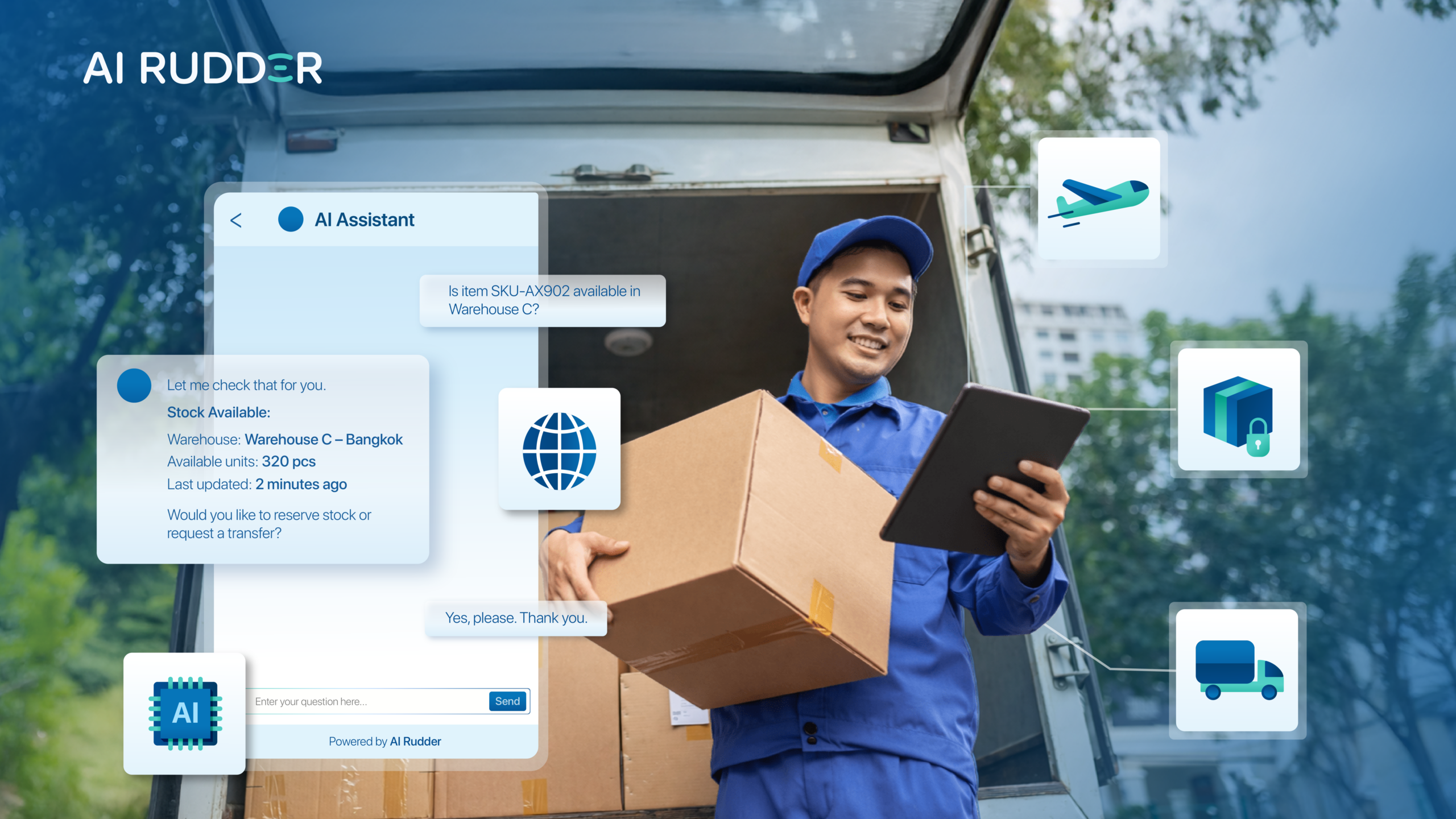
Behind every successful delivery is a complex logistics operation involving customer awaiting updates, warehouse teams preparing shipments, and driver navigating last-mile routes.
However, one of the biggest challenges in modern logistics operations lies in customer and internal communication.
As logistics network scale, fragmented communication leads to slower response times, inconsistent delivery updates, and operational inefficiencies. In an industry driven by speed and precision, this gap has become a costly roadblock.
This is where an “AI Chatbot for logistics” plays a critical role in enabling smarter, more connected delivery operations.
Turning Conversations Into Seamless Deliveries with Logistics Chatbots
One of the benefits of AI chatbots in the logistics industry is that customers can get real-time updates on their package deliveries. Customers can also track their packages simply by asking the chatbot. Chatbots can also notify customers if their delivery is delayed or disrupted, so customers are not clueless about the whereabouts of their packages.
Chatbots also allow customers to ask questions at any time, because they are available 24/7 and will answer customer questions, from FAQs to simple questions, quickly and accurately. This can make customers feel more valued and heard. If a customer’s question is complex, the chatbot will transfer the chat to a human agent.
What makes chatbots so valuable in the logistics industry is not only their ability to respond to chats, but also their ability to integrate with company systems. When integrated with ERP, CRM, and delivery-tracking platforms, chatbots can access real-time data from multiple departments. This means that customers can see accurate delivery updates instantly, and internal teams can also monitor delivery progress without having to manually switch between dashboards.
Chatbots Improve Logistics Productivity and Decision-Making
Implementing AI chatbots in the logistics industry can significantly reduce human error and shorten response times. Furthermore, chatbots can reduce data entry and routine processing errors to near zero compared to manual methods. This minimizes routine workload and frequent operational errors.
It also contributes to increased transparency and customer satisfaction. Because chatbots can be programmed to provide real-time shipping updates and answer customer questions at any time, customers feel more engaged and the information they receive is more accurate. For example, research shows that adopting AI chatbots in logistics leads to significant improvements in delivery performance and customer satisfaction. With greater transparency and faster responses, customers tend to have more positive experiences, which ultimately strengthens customer loyalty and the company’s reputation.
With AI Rudder’s AI Chat Agent, logistics companies may implement these benefits at scale. AI Chat Agent seamlessly integrates with existing logistics systems to handle high-volume inquiries such as shipment tracking, delivery status, and order confirmation in real-time, without adding operational burden. This ensures consistent and accurate communication across various channels while maintaining full visibility into customer interactions and operational data.
As a result, internal teams can focus more on strategic decision-making rather than routine tasks. Because repetitive requests are handled automatically, human agents can focus their attention on higher-impact activities such as resolving complex shipping issues, optimizing logistics networks, and analyzing operational trends. This shift not only improves daily efficiency but also strengthens the organization’s ability to adapt, grow, and make data-driven decisions in an increasingly dynamic logistics environment.
The Future of Smart Logistics is AI-Powered and Real-Time
AI chatbots are now a key transforming force in the logistics industry, providing customers with more efficient and convenient shipping processes. Through messaging platforms like WhatsApp or other chat apps, customers can now schedule or change deliveries, alter destinations, and even place bulk orders with just a few clicks.
For logistics companies, the presence of chatbots not only helps speed up service but also streamlines operations and improves customer service quality. Interactions that previously required time and effort can now be automated, allowing internal teams to focus on strategic decision-making and improving the customer experience.
As the logistics industry continues to evolve toward a fully digital and real-time ecosystem, AI chatbots will play a crucial role in shaping the future of smarter, faster, and more connected last-mile delivery. Chatbots are not just tools, but a strategic part of the smart logistics ecosystem.
Make Logistics Simpler, Smarter, and More Connected
AI Rudder helps logistics companies automate customer communication, streamline delivery workflows, and improve real-time visibility across operations.
Contact us to see how AI Rudder empowers logistics teams to automate workflows, improve efficiency, and keep customers informed in real time.
The retail landscape is changing rapidly, along with digital transformation. With more online shopping platforms popping up, customers expect faster responses, smoother experiences, and…
Behind every successful delivery is a complex logistics operation involving customer awaiting updates, warehouse teams preparing shipments, and driver navigating last-mile routes. However, one…
January 28, 2026
We use cookies to improve your experience. By continuing to browse, you agree to our Privacy Policy.