
Achieving Omnichannel Consistency: Unifying Every Customer Touchpoint
Every day, without realizing it, we as customers engage in a series of silent conversations with a brand. These conversations don’t happen over the…
May 13, 2026
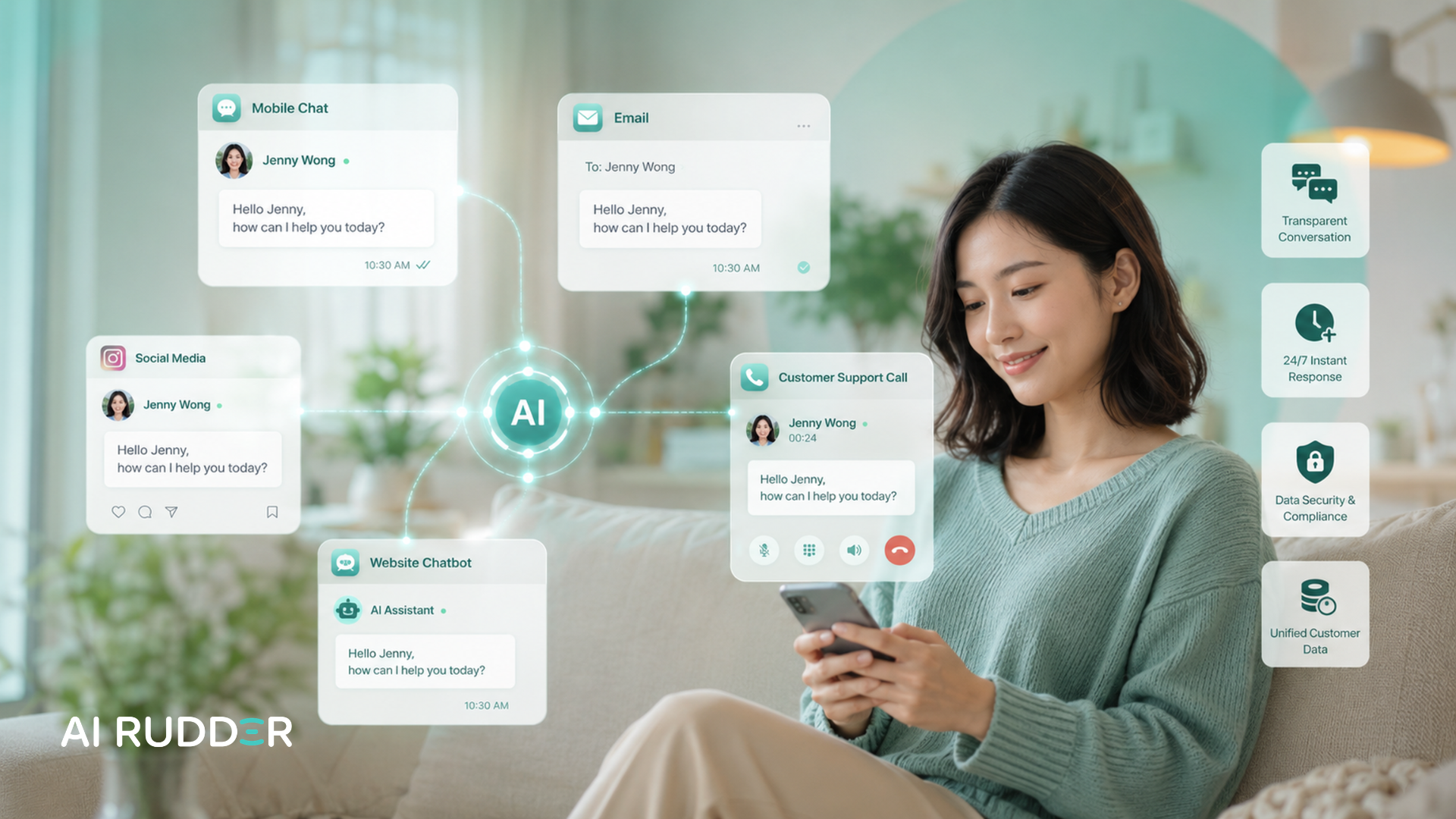
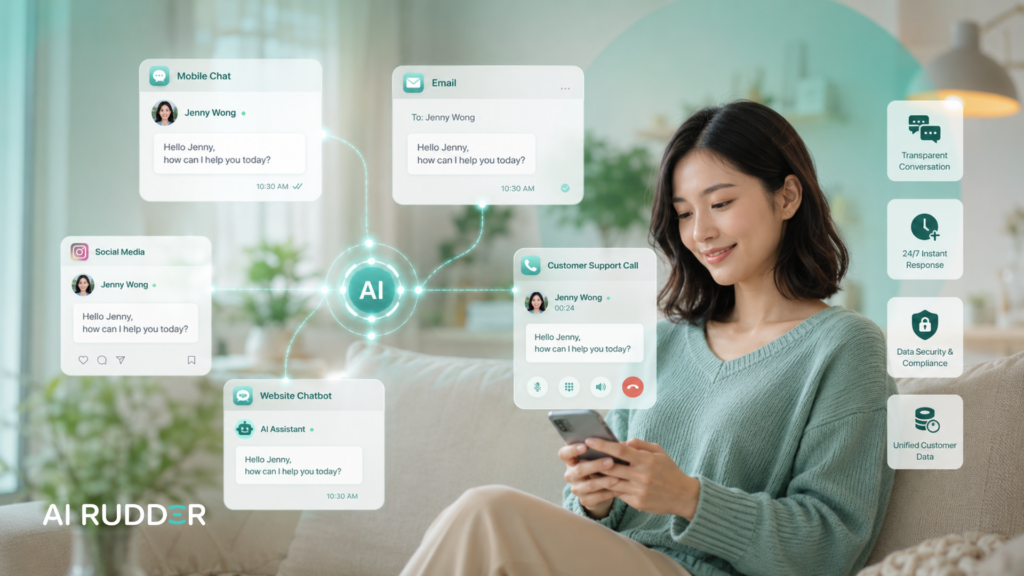
Every day, without realizing it, we as customers engage in a series of silent conversations with a brand. These conversations don’t happen over the phone or in person, but through every interaction we experience. The websites we visit, the chatbots we interact with, the marketing emails we receive in our inboxes, the ads we see on social media, and even our interactions with customer service, all of them “speak” to us. They convey messages about who the brand is, what it values, and how much they care about a consistent customer experience.
The question is simple yet fundamental: if every touchpoint could speak, is their story consistent? Or are we hearing many different versions, one voice from marketing, another from customer service, and yet another from the product experience? This inconsistency is what silently undermines customer trust.
Unfortunately, many companies still don’t fully realize that this cross-channel inconsistency can lead to confusion, frustration, and ultimately destroy customer trust. In the omnichannel era, where customers seamlessly move from one channel to another in seconds, their expectations are clear: one seamless experience, unified by brand consistency.
The reality in many organizations is often far from ideal. Many companies still operate in fragmented structures. Marketing teams focus on customer acquisition and promotions, sales teams struggle to close sales, and customer service teams struggle with problem resolution. Each of these teams may have its own targets, KPIs, and even its own “language.”
The result? An inevitable communication mess. Imagine a customer who sees a “Free Shipping for 24 Hours” promotion on Instagram. Intrigued, they contact the website’s chatbot to ask about the terms and conditions. However, the chatbot has no information about the promotion and instead provides a standard response about the usual shipping policy. Frustrated, the customer calls the call center, only to receive a third, slightly different information.
These fragmented experiences create a fragmented customer journey. McKinsey found that companies that successfully create omnichannel excellence can increase customer retention by more than 10%. Inconsistency, on the other hand, silently destroys brand credibility and value.
So, why is omnichannel consistency so crucial? The answer lies in the foundation of any relationship: trust. Every touchpoint represents a brand’s personality. If the voice, message, and experience are different across channels, customers will be confused as to who the brand truly is. Does the brand appear professional and trustworthy on the website, but feel stiff and unhelpful in email? Or does the brand that appears modern and friendly on TikTok, but is slow and bureaucratic in chat?
Brand consistency builds recognition and comfort. When a customer receives a good and consistent customer experience, whether across a mobile app, a physical store, or social media, they develop a sense of trust that the brand is reliable. This trust then translates directly into higher loyalty and retention.
It’s important to note that consistency doesn’t mean rigid. A brand can adjust its tone slightly more casually on social media and more formally in official emails, as long as the core values, key messages, and underlying quality of the experience remain consistent and feel coherent.
Building seamless omnichannel consistency requires more than just verbal instructions. It’s a system that must be built intentionally. The first element in establishing this consistency is a Unified Data System, the foundation of everything. A centralized data system allows every touchpoint to know the customer. A chatbot should know that this customer just received a promotional email; customer service on the phone should be able to see their previous chat history. This context makes every interaction feel personalized and ongoing, not a repeat experience.
Next, companies also need a centralized brand voice guide to guide brand communications. This document clearly defines the brand’s personality, tone of voice, and prioritized and avoided words. This guide should be accessed and implemented by all teams, from content writers to customer service agents.
Integrated platforms are also a key element of brand consistency, and technology is the linchpin. Integrating CRM, AI platforms for chatbots, and marketing automation tools ensures that data and messages flow seamlessly across channels without distortion.
A continuous feedback loop is also crucial for maintaining brand consistency. Consistency isn’t a one-time goal, but an ongoing process. Companies need to actively monitor and collect feedback from every touchpoint to identify gaps and inconsistencies, then make necessary adjustments.
For example, a bank or telecommunications operator that successfully implements omnichannel allows customers to start a conversation on a mobile app and then continue it over the phone without having to repeat the conversation because the data is already synchronized.
This is where AI in omnichannel emerges as the hero that unifies chaos. AI-powered omnichannel solutions are the technical answer to achieving human consistency.
AI can act as a conductor for all touchpoints. A well-trained AI model can ensure that the responses, tone, and information provided by chatbots on websites, voice bots on phones, and virtual assistants in apps remain aligned with brand guidelines. This technology enables mass personalization with a consistency previously impossible to achieve manually.
For brands that have grasped the essence of omnichannel communication, the answer is yes. Every touchpoint will introduce itself with the same name, convey the same value, and deliver the same promise of a seamless experience.
It’s time for us to reflect and ensure that all the “silent conversations” we have with customers are unified by a coherent and credible language. Because ultimately, in an increasingly competitive business, consistency isn’t just a strategy, it’s a promise you keep to your customers, at every corner of their journey.
Don’t let inconsistency drown out your brand’s best message. It’s time to ensure that every touchpoint isn’t just talking, but telling the same story. Contact our team today to discover how AI Rudder can help you orchestrate the perfect omnichannel symphony for your brand.

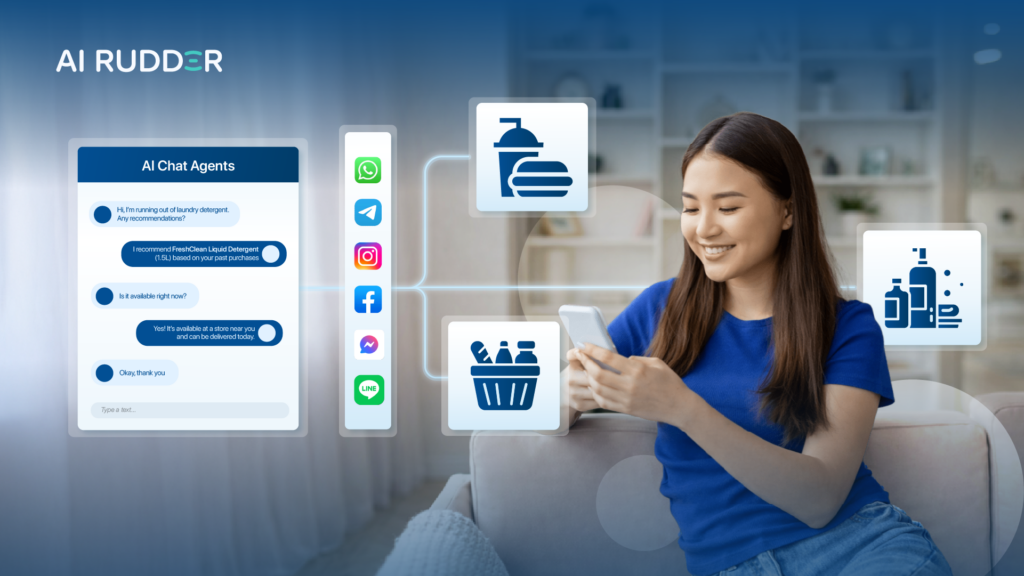
The fragmentation of shopping platforms, from offline to online stores, has created a disconnected everyday shopping experience. As the digital landscape advances, the expectation for a convenient, consistent, and connected shopping experience has become the new baseline. According to Capgemini (2025), approximately 71% of shoppers expect Generative AI to play a key role in their purchasing journey, signaling a major shift in how FMCG brands must engage with their audience. They want to browse, compare, purchase, and reorder seamlessly across channels, yet they still often face gaps between their online and offline experiences. In the fast-paced FMCG industry, this lack of synchronicity not only disrupts the customer experience, but also limits the brand’s ability to build long-term loyalty and repeat purchases.
AI-powered omnichannel enables FMCG brands, to move beyond simply being present across multiple channels towards creating an integrated ecosystem where every interaction is connected. With this approach, consumers can navigate from apps, websites, social media, to brick-and-mortar stores without friction or repetition. All interactions feel unified and relevant at every step.
In today’s FMCG landscape, the meaning of omnichannel needs to be redefined. Previously, companies operated in multichannel model, with channels such as websites, apps, and physical stores functioning separately. What brands truly need now is an omnichannel experience, where all channels are integrated, synchronized, and powered by shared data. With omnichannel, consumers can check in-store inventory through an app, use the same loyalty points for both online and offline purchases, and receive personalized product recommendations wherever they interact. At its core, AI-powered omnichannel is about delivering a truly seamless and consistent experience for consumers, regardless of the channel they use.
This transformation is crucial due to the unique characteristics of the FMCG industry. Products such as soap, shampoo, or snacks have a fast, frequent, and routine purchasing cycle, while consumer loyalty tends to be low and brand switching happens effortlessly. Consumers also have high expectations for convenience, speed, and stock availability, amidst intense price competition. In this landscape, implementing an omnichannel strategy is no longer just an option, but a necessity to retain customers and remain competitive.
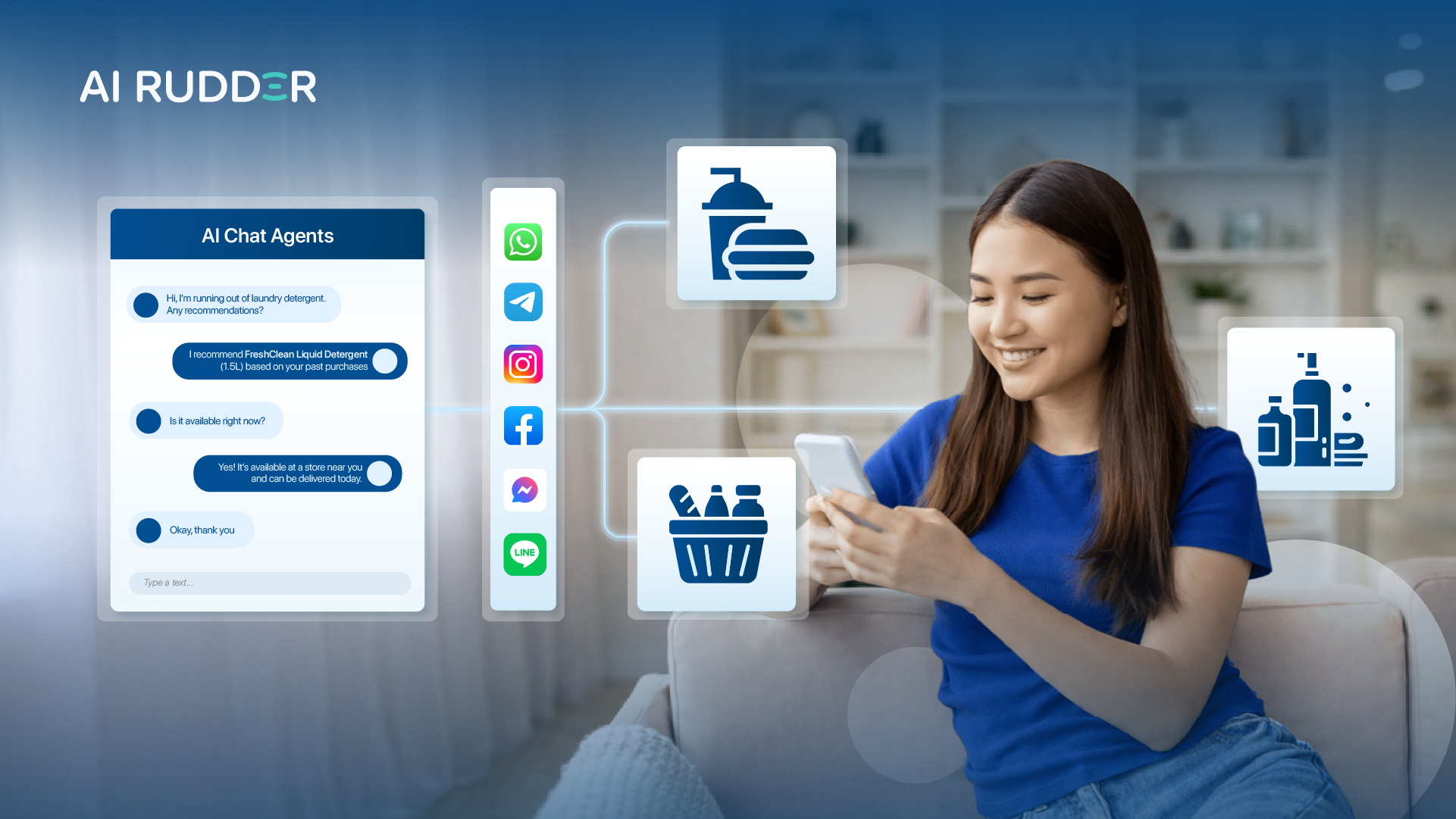
One example of AI-powered omnichannel in the FMCG industry is the use of virtual shopping assistants available 24/7. Chatbot services integrated into digital platforms enable consumers to engage in conversational interactions similar to communicating with a human. Consumers can ask questions, and the AI system will immediately respond with real-time information. The systems can handle a wide range of tasks, from answering FAQs and routine inquiries to checking product availability and efficiently processing orders.
Beyond automation, AI plays a key role in creating deeply personalized experiences. By analyzing conversations, purchase history, and consumption patterns, the system can provide relevant product recommendations. This capability is enhanced by contextual customer support, where AI can answer questions about product composition, usage instructions, and complaint handling with access to comprehensive customer data.
The most transformative aspect of AI-powered omnichannel is its ability to bridge the gap between online and offline shopping experiences. Consumers can take advantage of features like real-time stock checks, click-and-collect services, and personalized in-store navigation. This integration creates a truly seamless shopping experience across channels.
AI-powered omnichannel offers significant benefits for both consumers and businesses. For consumers, it provides greater ease and convenience in their daily shopping experience. With an AI-powered omnichannel ecosystem, they can shop anytime, anywhere, and however they want, without barriers or limitations. They also enjoy a more personalized experience, feeling acknowledged and understood through tailored recommendations, promotions, and interactions. At the same time, AI helps them save time by providing instant information and enabling smooth and fast transactions across all channels.
For FMCG and retail brands, AI-powered omnichannel drives measurable business outcomes. This technology helps increase customer loyalty through consistent and satisfying experiences, making customers more likely to return. Relevant recommendations also drive increased conversions and increase average order value. Operationally, AI can automatically handle routine inquiries, reducing the burden on customer service teams and lowering operational costs. Furthermore, every interaction becomes a rich source of data and insights, providing a deeper understanding of consumer preferences and pain points for more strategic decision-making.
It can be concluded that an omnichannel strategy powered by AI technology is no longer just a future trend, but has become a fundamental necessity in today’s FMCG industry. This digital transformation has successfully transformed transactional interactions into ongoing, personal relationships between brands and consumers.
Going forward, FMCG brands that want to remain competitive and relevant will need to view AI-powered conversations as a strategic distribution and engagement channel. The essence of everyday shopping no longer lies solely in the question of “where” consumers buy, but has shifted to “how” brands interact and build meaningful relationships with their consumers through every conversation.
Talk to our team today and unlock the full potential of intelligent, AI-powered omnichannel.
Want to elevate your brand with a truly intelligent and seamless omnichannel experience? Talk to our team today and unlock the full potential of AI-powered omnichannel with AI Rudder.
The gap between insurance services and customer expectations is widening. Long claim processing times and slow responses are no longer minor inconveniences, they are the primary reason for low retention. In a market where loyalty is earned through speed, being ‘fast enough’ is no longer enough.
At the same time, many insurers still operate across fragmented communication channels. Policy information, claims inquiries, and customer support are often spread across websites, call centers, mobile apps, email, and messaging platforms.
This disconnected experience leads to repeated customer effort, inconsistent service quality, and reduced customer satisfaction.
In this digital transformation, customers expect insurers to provide convenient customer service. Most customers interact with insurers through social media, websites, email, or other messaging apps. For insureres, having a strong digital presence and consistent service across all communication channels is crucial. Therefore, AI-driven omnichannel is one of the solutions that insurers can use to support a seamless customer experience.
AI-driven omnichannel is a platform that allows customers to interact seamlessly across various communication channels, from chat, email, SMS, to telephone.
In the voice channel specifically, the implementation of a voicebot for insurance ensures that phone interactions are no longer manual and slow, but automated and intelligent. Powered by AI, omnichannels can deliver consistent, 24/7 service with minimal effort.
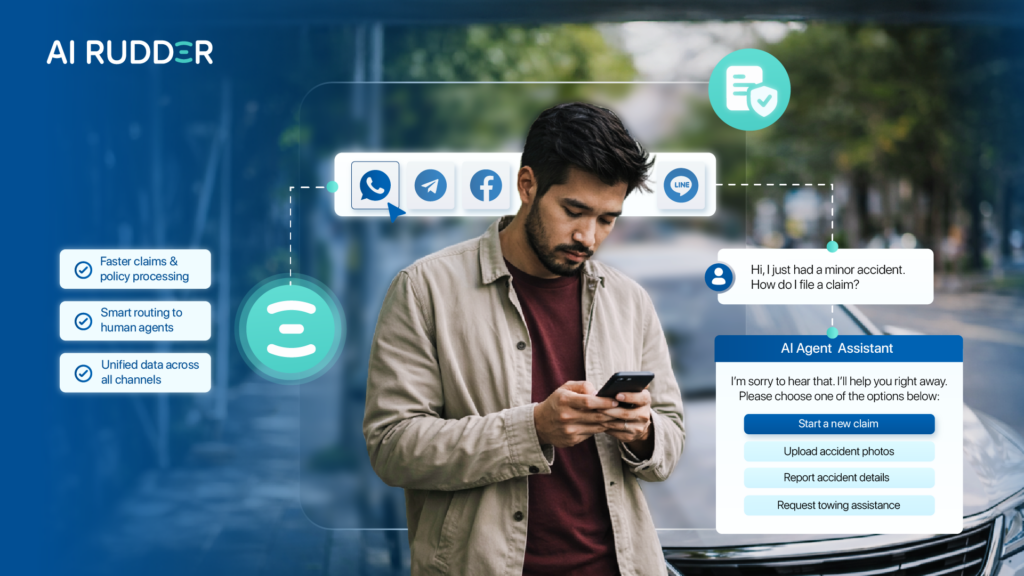
Whether a customer starts a conversation through chat and later follows up by phone, the system retains context and history, enabling smoother interactions and faster resolutions. Omnichannel also enables data integration across multiple channels, so that if customers contact a bot on a different channel, customer data will still be recorded and the bot will recall customer conversations on the previous channel.
With AI-driven omnichannel, insurers can deliver faster, more consistent, and more personalized experiences at every touchpoint. Starting with more personalized interactions, AI can help insurers analyze customer behavior and recommend products that align with their preferences. This can help improve customer satisfaction and increase product sales, which can benefit both parties.
Furthermore, with AI-driven omnichannel capabilities, insurers can also answer customer questions 24/7 across all touchpoints. By deploying a voicebot for insurance, companies can handle thousands of simultaneous calls without putting customers on hold. This not only reduces the workload of human agents but also ensures prompt resolution of customer issues, which can increase customer trust in insurers.
With sentiment analysis, AI can detect sensitive language in conversations, allowing the system to determine whether customers are satisfied or dissatisfied with the resolution provided by AI. This can help insurers improve customer retention and loyalty.
In addition to accelerating responses, AI-driven omnichannel can also direct complex inquiries that can’t be resolved by AI agents to the appropriate team. This allows human agents to directly handle cases that require empathy, consideration, or deeper explanation. This collaboration between AI and humans creates a balanced service experience, operationally efficient yet personalized for customers.
When every system and channel works together, customers feel it. A smoother experience and consistent communication across every touchpoint build a sense of trust and reliability. Customers feel valued, gain easier access to information they need, and know their concerns are handled promptly. As a result, policy renewal rates rise, satisfaction grows, and loyalty deepens, forming a strong foundation for sustainable growth in the insurance industry.
AI-driven omnichannel is no longer just an option, it’s becoming the standard in the insurance world.
By adopting a voicebot for insurance as part of an integrated ecosystem, customers receive a more consistent and personalized experience across both voice and text. This approach not only increases customer satisfaction but also reduces operational costs and accelerates claims and policy processing. Amidst this industry evolution, insurers who adopt AI-driven omnichannel are reaping the benefits.
AI Rudder helps insurers create seamless, AI-powered customer journeys by connecting every touchpoint into one unified experience. With intelligent automation, real-time data integration, and multilingual AI agents, insurers can improve response times, reduce costs, and deliver more human, personalized service at scale. Contact us to start your transformation.
It’s time to implement AI-powered omnichannel in the FMCG industry, not just being present across multiple channels but ensuring each channel works as an integrated ecosystem. With this approach, consumers can navigate from apps, websites, social media, to brick-and-mortar stores without friction or repetition. All interactions feel unified and relevant at every step.
This transformation is crucial due to the unique characteristics of the FMCG industry. Products such as soap, shampoo, or snacks have a fast, frequent, and routine purchasing cycle, while consumer loyalty tends to be low and brand switching happens effortlessly. Consumers also have high expectations for convenience, speed, and stock availability, amidst intense price competition. In this landscape, implementing an omnichannel strategy is no longer just an option, but a necessity to retain customers and remain competitive.
The most transformative aspect of AI-powered omnichannel is its ability to bridge the gap between online and offline shopping experiences. Consumers can take advantage of features like real-time stock checks, click-and-collect services, and personalized in-store navigation. This integration creates a truly seamless shopping experience across channels.
For FMCG and retail brands, AI-powered omnichannel delivers significant business impact. This technology helps increase customer loyalty through consistent and satisfying experiences, making customers more likely to return. Relevant recommendations also drive increased conversions and increase average order value. Operationally, AI can automatically handle routine inquiries, reducing the burden on customer service teams and lowering operational costs. Furthermore, every interaction becomes a rich source of data and insights, providing a deeper understanding of consumer preferences and pain points for more strategic decision-making.
Going forward, FMCG brands that want to remain competitive and relevant will need to view AI-powered conversations as a strategic distribution and engagement channel. The essence of everyday shopping no longer lies solely in the question of “where” consumers buy, but has shifted to “how” brands interact and build meaningful relationships with their consumers through every conversation.
Every day, without realizing it, we as customers engage in a series of silent conversations with a brand. These conversations don’t happen over the…
May 13, 2026

The fragmentation of shopping platforms, from offline to online stores, has created a disconnected everyday shopping experience. As the digital landscape advances, the expectation…
March 11, 2026
The gap between insurance services and customer expectations is widening. Long claim processing times and slow responses are no longer minor inconveniences, they are…
February 13, 2026
The fragmentation of shopping platforms, from offline to online stores, has created a disconnected everyday shopping experience. As the digital landscape advances, the expectation…
January 27, 2026