
Preventing Bad Debt in Telecom: Leverage Early-Stage AI Engagement for Enhanced Collections
In the fast-paced digital world, the number of telecom customers is growing, along by a wider variety of packages and products to suit user…
May 15, 2026
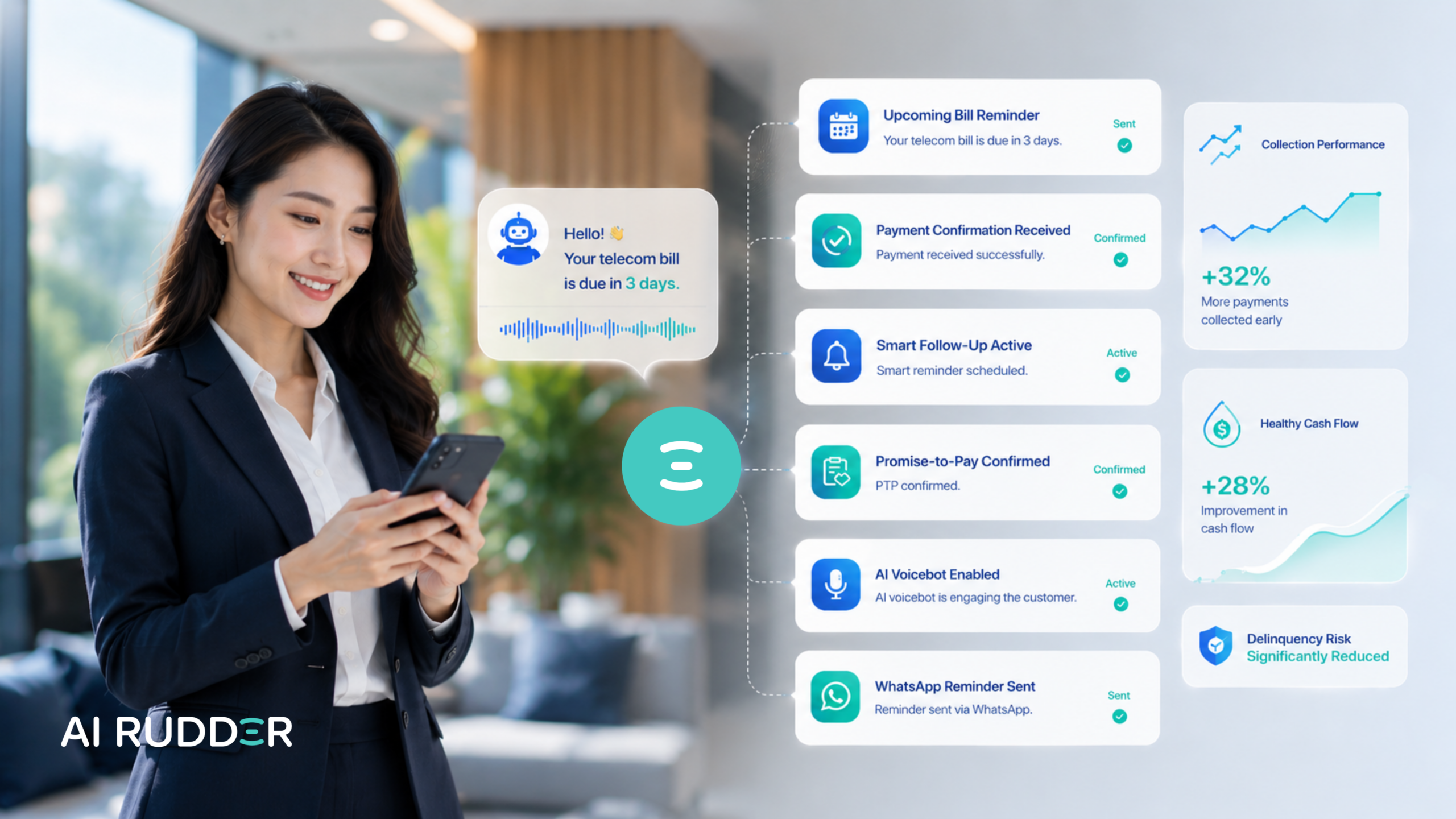
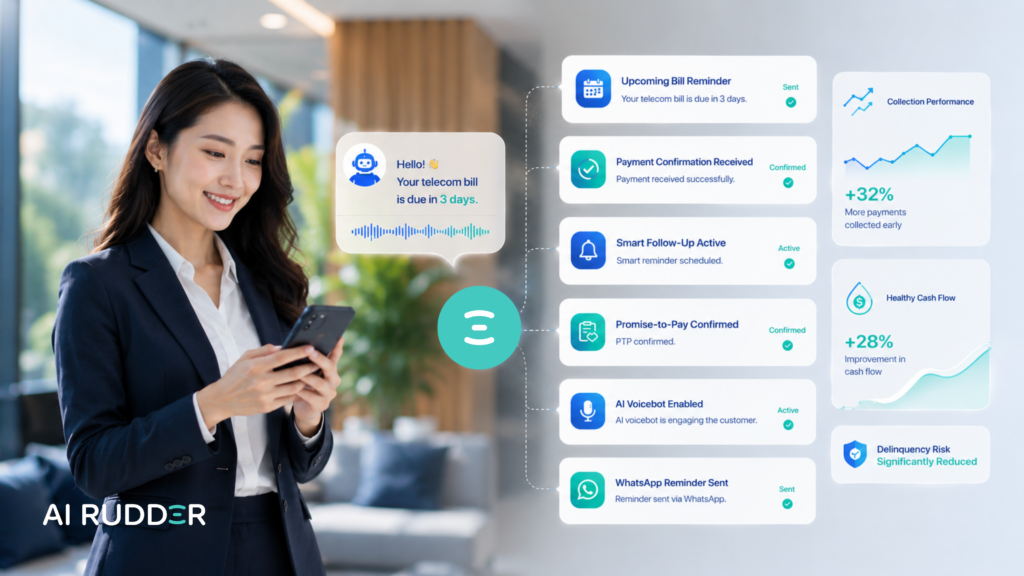
In the fast-paced digital world, the number of telecom customers is growing, along by a wider variety of packages and products to suit user needs and characteristics. Furthermore, telecom companies also offer various payment methods. This monthly payment model ensures that telco customers receive clear and timely reminders, especially at an early stage, namely a few days before the bill is due.
While traditional collections teams are crucial for managing payment processes, many still grapple with manual, inefficient methods. This often leads to inconsistent or delayed reminders, allowing minor payment delays to escalate into significant delinquencies. Such inefficiencies not only strain operational resources but also contribute to increased bad debt.
This is why AI automation is a relevant solution. AI enables the collection process to be automated from the earliest stages, even before the bill is due, allowing companies to reduce the risk of delinquency and maintain stable cash flow.
Previously,early-stage reminders in telecom relied on manual billing processes, such as phone calls or SMS. This approach made it challenging to deliver reminders with the necessary frequency and effectiveness. Constrained by human capacity, these early reminders were frequently inconsistent, some customers received notifications too late or not at all. This inconsistency made it challenging for telecom companies to maintain proactive engagement, resulting in many customers being missed because reminders were not sent at the appropriate time.
Furthermore, manual early-stage outreach also lacked structure and strategy. Agents were unable to scale their efforts to match the volume of postpaid customers, and there was no data-driven prioritization to decide who to contact first. Without segmentation based on payment history or risk levels, the early-stage process became slow, repetitive, and inefficient. These gaps significantly reduced the impact of early reminders, allowing small delays to escalate into delinquencies, increasing operational workload, and ultimately creating avoidable financial risk for telecom companies.
The early stage is the most effective phase for preventing bills from aging and ultimately becoming difficult to collect. At this stage, communication remains light, so customers tend to be more responsive because the interaction doesn’t feel like an aggressive collection effort. This phase offers a vital window of opportunity for telecom companies to proactively address potential payment delays before they escalate into formal delinquencies.
By implementing automation, large-scale outreach can also be executed quickly and consistently without increasing operational workload. AI-driven workflows enable highly personalized and relevant communications, moving away from generic, one-size-fits-all templates. As a result, customers receive timely and contextual reminders, significantly increasing the chances of on-time payments.
In the early stages, the collection process can be fully automated without agent intervention. Telecom companies can send pre-due reminders via WhatsApp, SMS, or voice bots a few days before the due, ensuring customers always remember their bills. The system can also run smart follow-ups that adjust the next steps based on customer responses. For instance, upon receiving a payment confirmation, subsequent reminders are automatically halted.
Furthermore, conversational AI empowers customers to independently inquire about billing details, payment methods, or monthly usage without having to speak with a human agent. Critical processes like promise-to-pay (PTP) confirmations can also be handled automatically, including seamless recording and scheduling. Through risk-based segmentation, the system prioritizes customers with a history of late payments, allowing for more strategic outreach. If a customer still doesn’t respond, automated escalation ensures the process moves to the next stage without delay. All of this makes early-stage collections faster, more measurable, and more scalable, while significantly reducing the burden on the collections team.
The adoption of early-stage billing automation has profoundly impacted telecom operations. The automation enables billing to be done before the due date, by helping customers remember their bills. As a result, overdue bills, which are more than 30 days old, have drastically decreased. Furthermore, automation has significantly reduced the workload of collections teams, which have shifted from manual to automated.
AI automation also makes the billing process much more consistent, resulting in a more professional and structured message. Customers also experience a smoother and more comfortable experience for the customer, ultimately enhancing brand loyalty.
Effectively preventing bad debt in telecom extends beyond merely accelerating collections, it requires a process that is fully automated, consistent, and rigorously data-driven. With large customer volumes and recurring monthly postpaid payment patterns, telcos need a system that can remind customers early, without relying on slow and inconsistent manual efforts.
With early collection, companies can initiate engagement from before a bill is issued until a few days before it’s due. This approach has proven to be the most effective way to prevent bad debts, as customers tend to be more responsive when communications are informative, rather than aggressively soliciting. Telecoms that adopt automation early on will be much better equipped to maintain cash flow, reduce the risk of delinquency, and provide a smoother, more professional, and more human-centric customer experience.
Transform your telecom collection workflow, from early reminders to smart follow-ups, with AI-powered agents. Partner with AI Rudder to build a scalable, intelligent collection ecosystem designed to protect your revenue streams and enhances customer relationships.

With the rise of diverse credit products, financial institutions must protect customer trust even during late-payment interactions. Manual collection prioritizes transactions, not customer relationships. Therefore, to maintain a relational collection process, financial institutions need to incorporate empathy into the collection process. AI-powered debt collection makes this possible at scale, allowing for personalized communication that respects the customer’s unique situation.
The impact is real, when collections are handled with empathy, 73% of customers stay loyal to the brand. Empathy-based approaches can help businesses build better relationships with their customers, resulting in a more positive environment for debt resolution. This brand loyalty leads to better conversations, higher recovery rates, and stronger relationships.
Customers become increasingly anxious when the same message is sent multiple times without regard for context. Instead of helping, repetitive reminders make them feel watched and lose control over their own situation. The lack of flexible payment options also makes customers feel cornered. Ultimately, all these combinations push them to avoid, rather than respond, and this is the biggest challenge in the collection process.
This approach also prioritizes education over pressure. The language used is helpful and non-judgmental, making customers feel supported rather than blamed. With the right communication tone, the collection process transforms from a stressful conversation into a more supportive and solution-oriented interaction.
Furthermore, the humanized collection process enables customers to negotiate and find the most realistic solutions for them, ranging from rescheduling to partial payments. When customers feel empowered and valued, trust naturally grows, and long-term relationships can be sustained.
Emotional connection also transforms banks into partners who assist customers in finding the best solutions, rather than simply bill collectors. This viewpoint reduces resistance and opens the door to more constructive conversations.
In fact, data shows that an empathetic communicative approach can significantly increase the promise-to-pay (PTP). This means that empathy is not just about ethics, but a business strategy that yields tangible results.
Sentiment analysis technology can also help banks detect signs of frustration, urgency, or confusion in conversations, allowing the system to determine when to continue the interaction automatically and when to escalate the case to a human agent. Additionally, AI can explain overdue bills, provide payment options, and answer customer questions whenever needed, 24/7, while maintaining a professional and empathetic tone.
With a smarter and more responsive workflow, the billing process becomes much more efficient. Human agents can focus on more complex and high-priority cases, while routine interactions are handled automatically but remain humanized. As a result, customer experience improved, resolutions were faster, and operations became lighter.
AI Chat Agents are designed with advanced Natural Language Understanding (NLU) to maintain this tone consistently at scale. By using AI to deliver transparent explanations about bills and their consequences, companies can guide customers without causing excessive fear or pressure, ensuring a professional yet supportive experience.
This is where omnichannel capabilities really shine. The AI is intelligent enough to analyze customer situations in real time and proactively offer flexible solutions, such as rescheduling, additional installments, or partial payments, directly through the customer’s preferred channel, such as WhatsApp or Telegram. By providing these options through automated and non-intrusive dialog, the interaction feels like a collaborative partnership rather than rigid one-way instruction. This smart flow maintains a healthy conversation rhythm while effectively reducing customer stress.
By leveraging AI’s behavioral analytics, financial institutions can segment customers based on their specific history and interaction patterns. This allows for the accurate personalization of messages, channels, and timing for each segment. As shown in the omnichannel flow, when a customer receives a recommendation or reminder that is tailored to their specific situation, the collection process is not only more effective for the business but also feels more relevant and humane for each customer.
When empathy is combined with technology, banks can create long-term trust, which is the foundation of healthy customer relationships. Relevant, responsive, and data-driven communication reinforces the perception that the bank truly understands its customers’ circumstances and needs.
In the future, AI will play a strategic role in creating collection experiences that are scalable yet remain personal. With a smarter and more adaptive system, banks can maintain the quality of interactions while continuously improving recovery rates and customer loyalty.
In the fast-paced digital world, the number of telecom customers is growing, along by a wider variety of packages and products to suit user…
May 15, 2026

Jakarta, January 26, 2026 — Adira Finance has significantly reduced operational costs while elevating customer experience through the deployment of artificial intelligence (AI) technology…
January 28, 2026

The Shift from Transactional to Empathetic Debt Collection Debt collection has long been viewed as a transactional and stressful process. With the rise of…
January 28, 2026