

AI Can Make Calls. But Can It Navigate an IVR System?
CALL-E, AI Rudder’s newest goal-based voice AI agent, is designed to do more than simply connect a call. To complete a task, CALL-E must…
September 11, 2026
Jan 28, 2026 posted by dike rani

With the rise of diverse credit products, financial institutions must protect customer trust even during late-payment interactions. Manual collection prioritizes transactions, not customer relationships. Therefore, to maintain a relational collection process, financial institutions need to incorporate empathy into the collection process. AI-powered debt collection makes this possible at scale, allowing for personalized communication that respects the customer’s unique situation.
The impact is real, when collections are handled with empathy, 73% of customers stay loyal to the brand. Empathy-based approaches can help businesses build better relationships with their customers, resulting in a more positive environment for debt resolution. This brand loyalty leads to better conversations, higher recovery rates, and stronger relationships.
Customers become increasingly anxious when the same message is sent multiple times without regard for context. Instead of helping, repetitive reminders make them feel watched and lose control over their own situation. The lack of flexible payment options also makes customers feel cornered. Ultimately, all these combinations push them to avoid, rather than respond, and this is the biggest challenge in the collection process.
This approach also prioritizes education over pressure. The language used is helpful and non-judgmental, making customers feel supported rather than blamed. With the right communication tone, the collection process transforms from a stressful conversation into a more supportive and solution-oriented interaction.
Furthermore, the humanized collection process enables customers to negotiate and find the most realistic solutions for them, ranging from rescheduling to partial payments. When customers feel empowered and valued, trust naturally grows, and long-term relationships can be sustained.
Emotional connection also transforms banks into partners who assist customers in finding the best solutions, rather than simply bill collectors. This viewpoint reduces resistance and opens the door to more constructive conversations.
In fact, data shows that an empathetic communicative approach can significantly increase the promise-to-pay (PTP). This means that empathy is not just about ethics, but a business strategy that yields tangible results.
Sentiment analysis technology can also help banks detect signs of frustration, urgency, or confusion in conversations, allowing the system to determine when to continue the interaction automatically and when to escalate the case to a human agent. Additionally, AI can explain overdue bills, provide payment options, and answer customer questions whenever needed, 24/7, while maintaining a professional and empathetic tone.
With a smarter and more responsive workflow, the billing process becomes much more efficient. Human agents can focus on more complex and high-priority cases, while routine interactions are handled automatically but remain humanized. As a result, customer experience improved, resolutions were faster, and operations became lighter.
AI Chat Agents are designed with advanced Natural Language Understanding (NLU) to maintain this tone consistently at scale. By using AI to deliver transparent explanations about bills and their consequences, companies can guide customers without causing excessive fear or pressure, ensuring a professional yet supportive experience.
This is where omnichannel capabilities really shine. The AI is intelligent enough to analyze customer situations in real time and proactively offer flexible solutions, such as rescheduling, additional installments, or partial payments, directly through the customer’s preferred channel, such as WhatsApp or Telegram. By providing these options through automated and non-intrusive dialog, the interaction feels like a collaborative partnership rather than rigid one-way instruction. This smart flow maintains a healthy conversation rhythm while effectively reducing customer stress.
By leveraging AI’s behavioral analytics, financial institutions can segment customers based on their specific history and interaction patterns. This allows for the accurate personalization of messages, channels, and timing for each segment. As shown in the omnichannel flow, when a customer receives a recommendation or reminder that is tailored to their specific situation, the collection process is not only more effective for the business but also feels more relevant and humane for each customer.
When empathy is combined with technology, banks can create long-term trust, which is the foundation of healthy customer relationships. Relevant, responsive, and data-driven communication reinforces the perception that the bank truly understands its customers’ circumstances and needs.
In the future, AI will play a strategic role in creating collection experiences that are scalable yet remain personal. With a smarter and more adaptive system, banks can maintain the quality of interactions while continuously improving recovery rates and customer loyalty.
CALL-E, AI Rudder’s newest goal-based voice AI agent, is designed to do more than simply connect a call. To complete a task, CALL-E must…
September 11, 2026

For Business Process Outsourcing (BPO) companies, Quality Assurance (QA) is not just an internal metric; it is a contractual obligation. BPOs manage diverse portfolios…
June 29, 2026
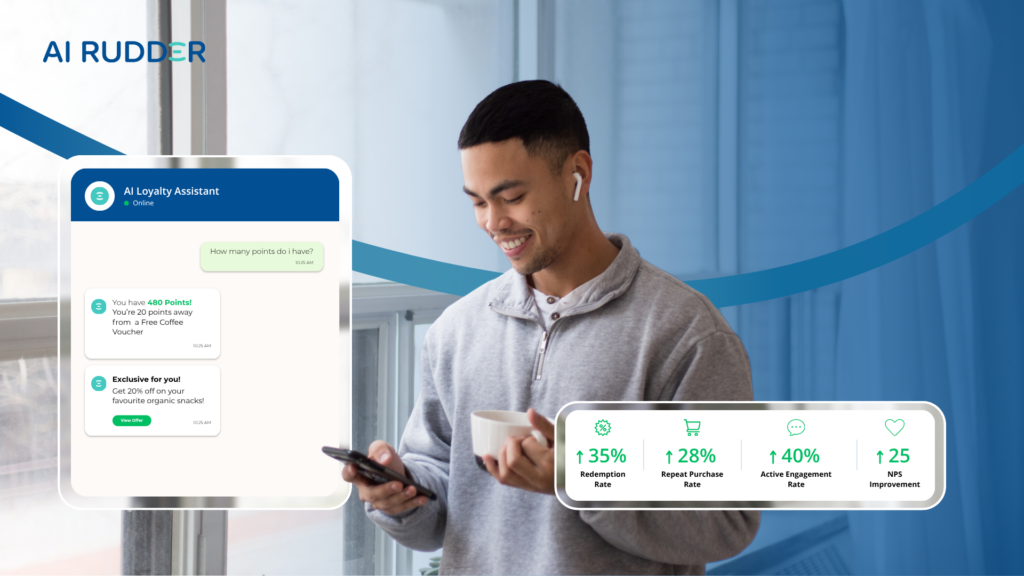
In the Fast-Moving Consumer Goods (FMCG) industry, consumer loyalty is notoriously difficult to secure. Products are purchased frequently, switching costs are practically non-existent, and…
June 18, 2026