
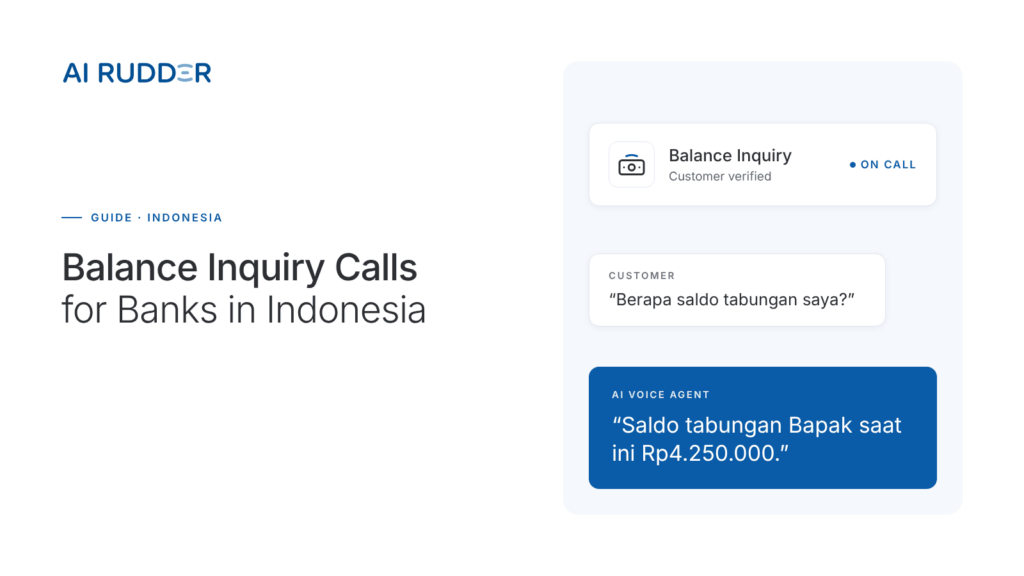
How Banks in Indonesia Use Voice AI for Balance Inquiries
Banks in Indonesia use AI voice agents to answer balance, mutation and account status questions on the phone, after the caller passes an identity…
November 16, 2026
Nov 16, 2026 posted by Ming
Yes, when the bank manages its voice AI with the same controls it applies to other customer-facing technology services. Bank Negara Malaysia’s Risk Management in Technology policy document (RMiT) expects banks to control technology and cyber risk, keep services resilient and detect fraud. For voice AI, that means assessing the vendor, securing call data, keeping audit trails of calls, monitoring service availability, keeping humans in charge of decisions, and being able to show all of this to BNM.
AI voice agents talk to customers directly, so a failure is visible at once. That makes evidence and resilience as important as call quality.
This article summarises published regulation and commentary. It is not legal advice. Confirm current requirements with your risk and compliance teams.
RMiT sets BNM’s expectations for how financial institutions manage technology risk. It was revised in November 2025, according to Allen & Gledhill, with changes aimed at:
Resilience. Stronger handling of service disruptions, with a customer-centric approach to intermittent issues.
Cyber security. Controls and practices raised in line with global standards.
Digital service security. Stronger fraud detection, proactive monitoring and customer empowerment.
New technology. Secure adoption of new or advanced technologies.
Vendor assessment. Treat the voice AI provider as a technology service provider. Review its security standards, data location, access controls and incident process.
Data security. Encrypt recordings and transcripts, restrict access and log who listens.
Audit trails. Record calls, with the script version, the decisions made and any handoff. Regulators and complaint handlers will ask what was said.
Availability. Monitor call success rates and latency. Plan what happens if the voice service fails, such as routing calls to human agents.
Human oversight. People set the rules, approve scripts and handle exceptions. The AI voice agent follows those rules.
Fraud controls. Verification flows that never ask for codes or passwords, and fast escalation of suspected fraud.
Step 1. Document the use case. What the agent does, what it can’t do and when it hands off.
Step 2. Approve scripts formally. Keep version history.
Step 3. Check calls automatically. Quality Assurance can check calls against your SOPs and flag missed disclosures, failed verification and complaints.
Step 4. Report monthly. Call volumes, outcomes, handoffs, incidents and fixes.
Step 5. Test failure scenarios. What happens when the core system is slow or the voice service is down?
Which security standards is the platform built to meet?
Where is call data stored and processed?
How do you notify us of incidents, and how fast?
Can we export full call records and QA results?
How do script changes get approved and logged?
Buyers often ask how local rules compare with US and EU guidance. These references help.
NIST AI Risk Management Framework. NIST’s AI RMF 1.0, published in January 2023, organises AI risk work into four functions: govern, map, measure and manage. It stresses human oversight, documentation and ongoing monitoring.
GDPR Article 22. In the EU, people have the right not to be subject to decisions based solely on automated processing that significantly affect them. It is a useful benchmark for when a person should review an AI outcome.
Treating voice AI as a marketing tool. It’s a customer-facing technology service and needs the same controls.
No fallback. If the service fails, calls must still be answered.
Sampled QA only. Reviewing a few calls a week leaves gaps BNM may ask about.
Unlogged script changes. Every change should have an owner and a date.
A bank in Malaysia already runs AI voice agents with AI Rudder for telemarketing and collections in Malay and English. AI Rudder has an office in Malaysia and is built to meet SOC 2 and ISO 27001, alongside GDPR and PDPA requirements and relevant IMDA and CSA standards. Its AI Contact Center includes Quality Assurance that checks calls against your SOPs. AI Rudder is named in Tech in Asia’s Singapore’s Top Fintech Companies 2027 list, in the Enterprise Fintech category.
Can voice AI support regulatory compliance?
It can follow approved rules and record the evidence. The bank stays responsible for the rules and oversight.
What is BNM’s RMiT?
Bank Negara Malaysia’s policy document on managing technology and cyber risk in financial institutions, last revised in November 2025.
How do you automate compliance in voice operations?
Build rules into the system, check calls automatically against your SOPs and report results to risk and compliance teams.
What evidence should a bank keep?
Recordings, transcripts, script versions, QA results, incidents and handoff records.
Ask your risk team what evidence they would need for a voice AI deployment. Get a Demo and we’ll show you how AI Rudder provides it.
Banks in Indonesia use AI voice agents to answer balance, mutation and account status questions on the phone, after the caller passes an identity…
November 16, 2026
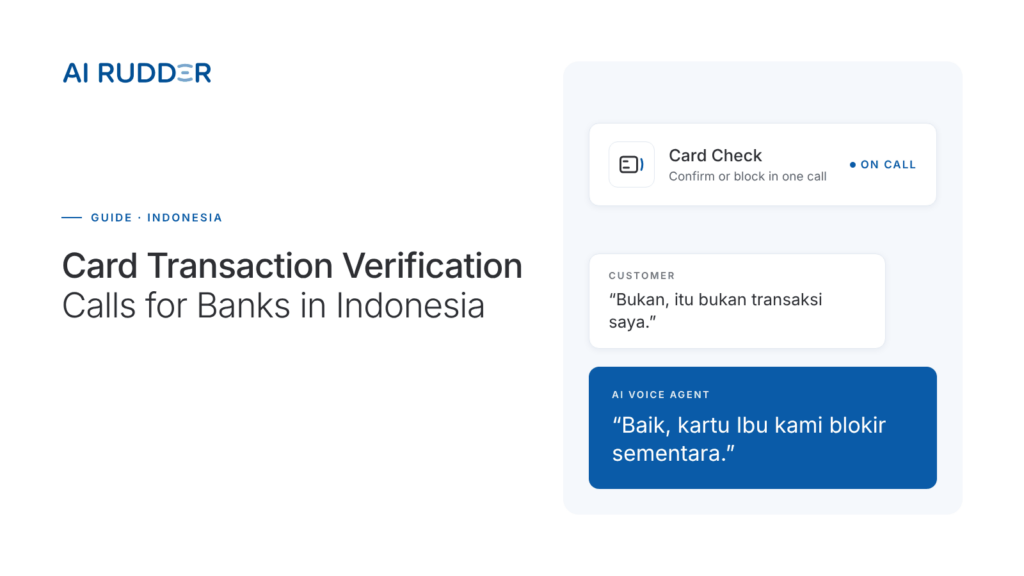
Banks in Indonesia automate card transaction verification calls by connecting their fraud detection system to an AI voice agent. When a card payment looks…
November 16, 2026
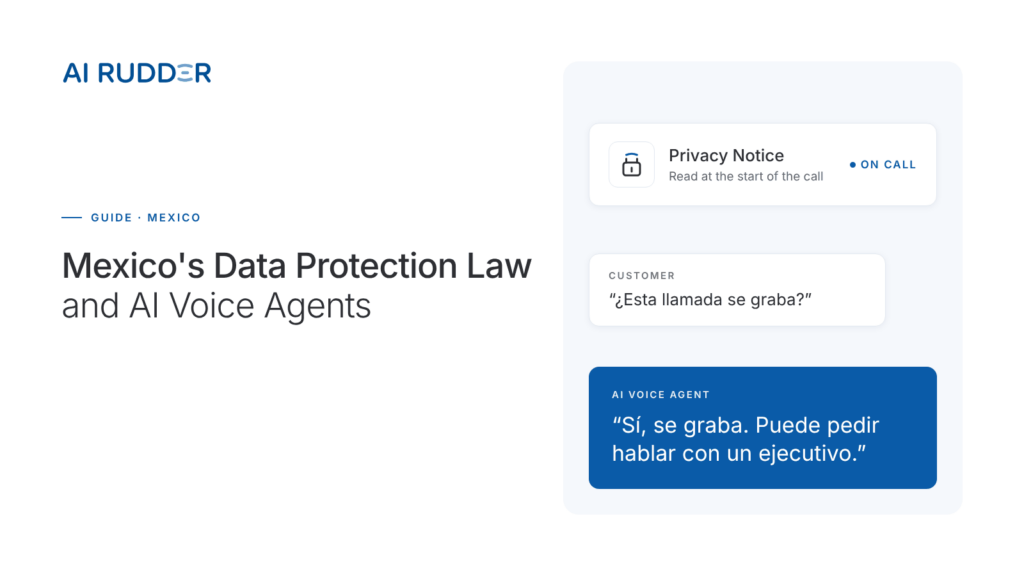
Mexico's new Federal Law on the Protection of Personal Data Held by Private Parties (LFPDPPP) took effect on 21 March 2025 and applies to…
November 16, 2026