
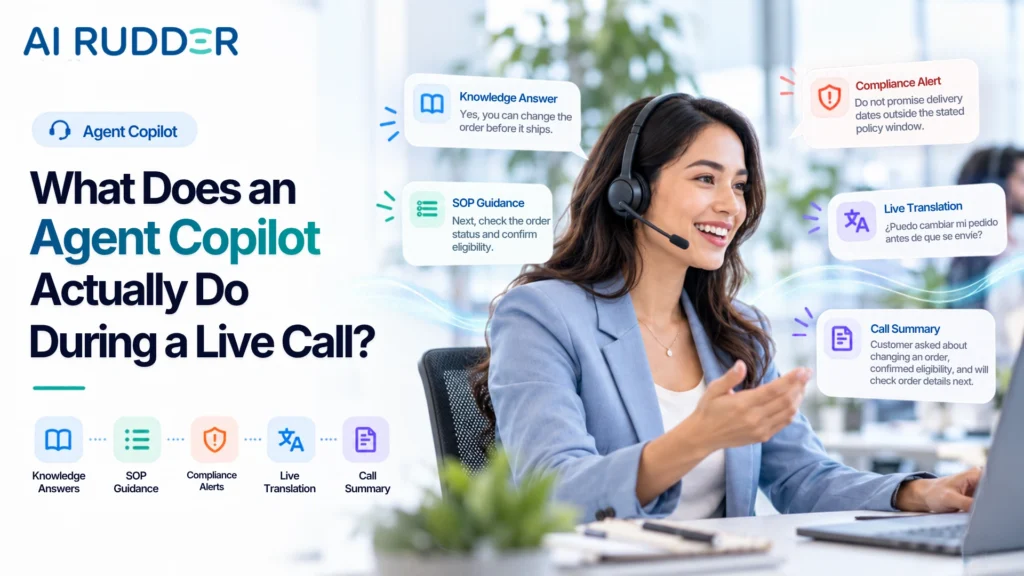
What Does an Agent Copilot Actually Do During a Live Call?
An agent copilot works beside the agent on a live call, listening and helping in real time. It suggests answers from the company's approved…
October 20, 2026
Oct 20, 2026 posted by Ming
In most contact centers, quality assurance means listening to a sample. A QA team picks a few calls per agent per week and scores them against a checklist. The feedback reaches the agent days later. Everything outside the sample goes unreviewed.
When every call is recorded and transcribed, then checked automatically, that changes. Julo, an Indonesian peer-to-peer lender, reports 100% QA coverage, 3–4x faster reviews, coaching moved from T+7 to T+1, and 10–20% fewer complaints after moving its telemarketing operation to AI Rudder’s AI Contact Center.
Sampling made sense when every review meant a person listening to a full call. It was the only affordable option. Its costs grow with the operation.
Coverage and delay are the obvious ones. A compliance problem on an unsampled call is invisible until a customer complains. If feedback reaches an agent a week after the call, the same mistake may have been repeated dozens of times.
Fairness is the other. Agents judged on a handful of calls can reasonably feel the sample didn’t represent their work.
Julo’s starting point was a manual telemarketing operation. Its case study describes the costs of manual dialing: looking up and entering each number and waiting for the connection. The costs also included fewer calls per hour and call pacing that varied with each agent’s speed.
Julo switched to AI Rudder’s AICC with automated predictive dialing, which removed the manual dialing work and evened out call pacing. Running calls through one platform also puts every call in one place: recorded and turned into text, ready for review.
AICC’s quality assurance module is built for that review. It checks conversations against SOPs the client defines. It adds sentiment analysis and multilingual support.
Monitoring and reporting add real-time voice and text monitoring. They also add scoring and dashboards. Quality assurance can also be adopted on its own, outside AICC.
From Julo’s approved case study:
The coaching change is the one supervisors notice first. Feedback the next day is feedback an agent can still connect to the call it came from.
Checking every call answers questions a sample can’t:
For BPOs running calls for several clients, full coverage also gives each client a view of every call made on its behalf.
What happens to the QA team? Its time moves to the work a sample never left room for: reviewing flagged calls and refining the checks. The rest goes to coaching agents.
Can we set our own scoring criteria? Yes. AI Rudder’s quality assurance uses customisable SOP checks.
Does it work in local languages? Quality assurance includes multilingual support, and AI Rudder’s agents are live in 22 markets.
Can we use quality assurance without the full AICC? Yes. Quality assurance can be adopted on its own.
Work out what share of your calls your QA team reviewed last month. Get a Demo and we’ll show you what checking all of them would look like.
An agent copilot works beside the agent on a live call, listening and helping in real time. It suggests answers from the company's approved…
October 20, 2026
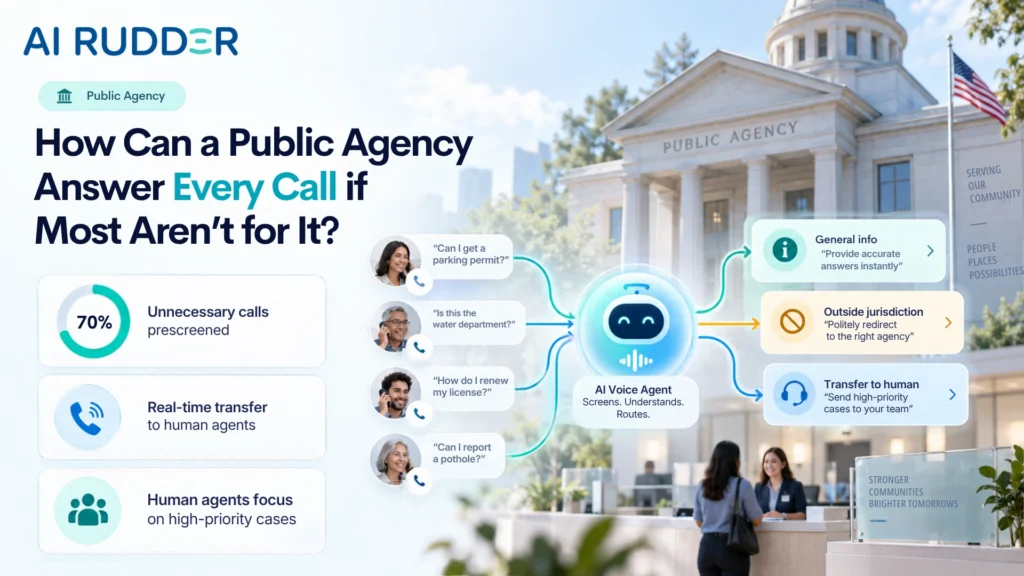
KPK, Indonesia's Corruption Eradication Commission, uses an inbound AI voice agent integrated with AI Rudder's AI Contact Center to sort calls first. KPK reports…
October 20, 2026
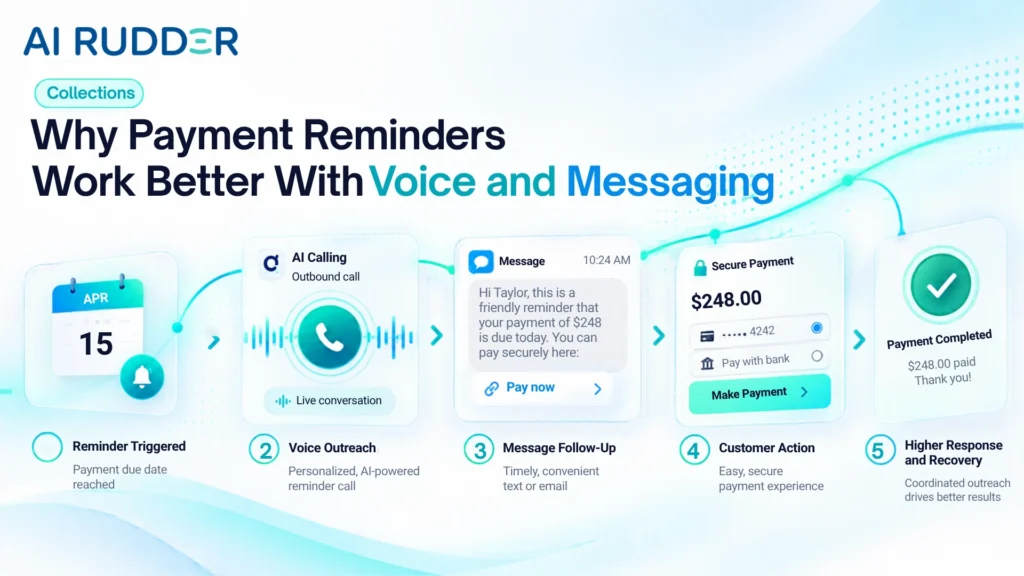
Customers don't all answer the same channel, and a reminder that arrives on the wrong one is easy to ignore. Kredivo combined AI calls…
October 20, 2026