
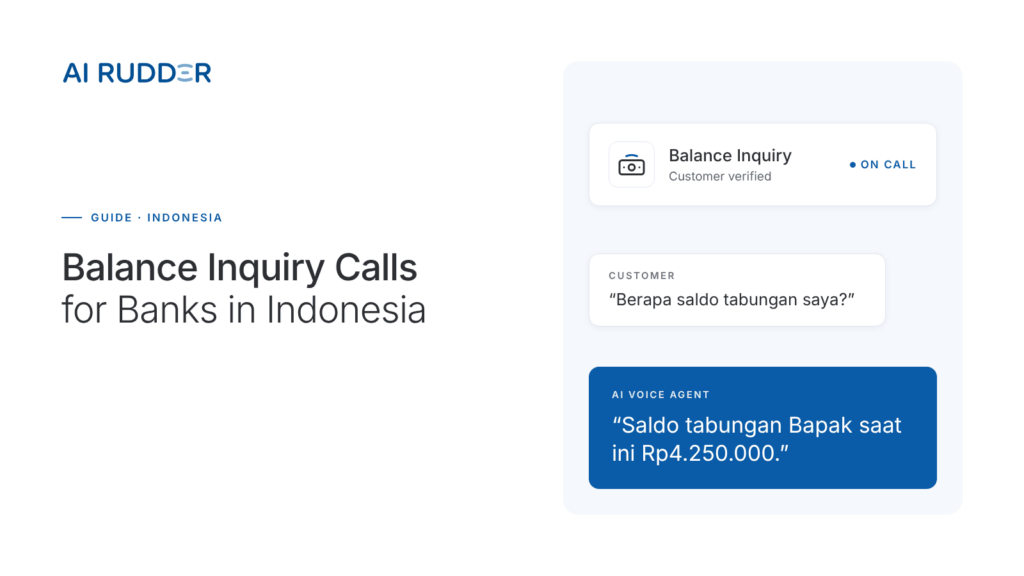
How Banks in Indonesia Use Voice AI for Balance Inquiries
Banks in Indonesia use AI voice agents to answer balance, mutation and account status questions on the phone, after the caller passes an identity…
November 16, 2026
Nov 09, 2026 posted by Ming
Yes, AI voice agents can run collections calls in Mexico, provided they follow the same CONDUSEF rules as any collector. Those rules set the hours when collectors may call, how they must identify themselves, who they may and may not contact and what they may never say. Each one can be configured into an AI voice agent, and every call can be checked against them afterwards.
Mexico regulates collections closely. Its consumer finance regulator, CONDUSEF, supervises collection agencies working for financial institutions and runs a public register where borrowers can report collectors who break the rules. For a bank, lender or fintech, the question is whether an AI agent can follow those rules on every call, at volume.
This article summarises public reporting on the rules and is not legal advice. Confirm current requirements with your legal team.
CONDUSEF supervises collection agencies (despachos de cobranza) under its general provisions, published in the Diario Oficial de la Federación and amended over time. As reported by El Imparcial in April 2026, the rules include:
The same report says fines range from 13,458 to 134,580 pesos depending on severity, and that financial institutions are liable for abuses by the agencies they hire.
Calling hours. Mexico (CONDUSEF): 8:00 to 21:00 in the debtor’s time zone. United States: 8:00 a.m. to 9:00 p.m. under the FDCPA.
Third parties. Mexico (CONDUSEF): No contact with non-guarantors. United States: FDCPA limits third-party communication.
Frequency. Mexico (CONDUSEF): Respectful, non-harassing contact. United States: Regulation F: seven calls in seven days per debt.
AI voices. Mexico (CONDUSEF): Same rules as any collector. United States: FCC ruling (Feb 2024): AI voices fall under TCPA consent rules.
Liability. Mexico (CONDUSEF): Institution liable for its agencies. United States: Creditors and agencies both face liability.
If a lender is responsible for what its collection agencies do, it needs to know what is said on every call made in its name. With human collectors spread across agencies, most lenders see only complaints and occasional audits. Borrowers, meanwhile, can report problems easily: REDECO (Registro de Despachos de Cobranza) accepts complaints online, in person or in writing, for example about calls outside permitted hours or contact with third parties.
Step 1: Set the calling window. Schedule calls only between 8:00 and 21:00 in the borrower’s time zone, and apply any stricter internal policy.
Step 2: Write the opening. The agent states who is calling and on whose behalf, in the same words on every call, from a traceable number.
Step 3: Confirm identity first. The agent confirms it is speaking to the borrower before mentioning the debt. If someone else answers, it ends the call politely without discussing it.
Step 4: Approve the script. Compliance approves the wording in Mexican Spanish. The agent doesn’t improvise threats or pressure.
Step 5: Confirm agreements in writing. A payment commitment made on the call triggers a written confirmation by message.
Step 6: Define the handoffs. Disputes, hardship and requests for a person go to a human agent with context.
Step 7: Review every call. AI Rudder’s Quality Assurance checks conversations against the lender’s SOPs, so the lender can show what was said if a complaint is filed.
A compliant early-overdue call in Mexico follows a short, predictable path:
Each step is a checkpoint Quality Assurance can score. If any call skips identity or goes beyond the approved wording, it is flagged for review the next day.
Collectors who don’t recognise third parties. A relative who answers the phone must hear nothing about the debt.
Late or early calls. Campaigns set to head-office time can break the window for borrowers in other time zones.
Unrecorded agency calls. Without a record, a lender can’t defend itself against a REDECO complaint.
Generic Spanish. Borrowers expect Mexican Spanish. A voice that sounds foreign loses the call.
Call data falls under Mexico’s new Federal Law on the Protection of Personal Data Held by Private Parties, published on 20 March 2025, which also gives people the right to object to automated processing that significantly affects them. Keep a person in the loop for decisions such as restructuring.
AI Rudder opened a local office in Mexico in 2023. Its agents are live in 22 markets, it has worked on AI for customer calls since 2019 with 80+ billion AI calls executed, and collections is its lead use case. It is built to meet SOC 2 and ISO 27001, alongside GDPR and PDPA requirements and relevant IMDA and CSA standards.
Is AI debt collection legal in Mexico?
Yes. CONDUSEF’s rules apply to the collection, whoever or whatever makes the call, so an AI agent must follow the same hours, identification and third-party rules.
Can an AI voice agent call outside 8:00 to 21:00 by mistake?
Calling windows are set in the campaign and dialing rules. Ask any vendor how its system enforces them.
Can the AI voice agent speak to a family member about the debt?
It shouldn’t. The call flow confirms identity first and ends the call without discussing the debt if the borrower isn’t on the line.
How do we prove compliance if a borrower files a complaint?
Every AI call is recorded and can be transcribed and checked, so the lender can review exactly what was said.
List the rules your collections calls in Mexico follow, including your own policy on top of CONDUSEF’s. Get a Demo and we’ll show you how an AI voice agent would be configured to them.
Banks in Indonesia use AI voice agents to answer balance, mutation and account status questions on the phone, after the caller passes an identity…
November 16, 2026
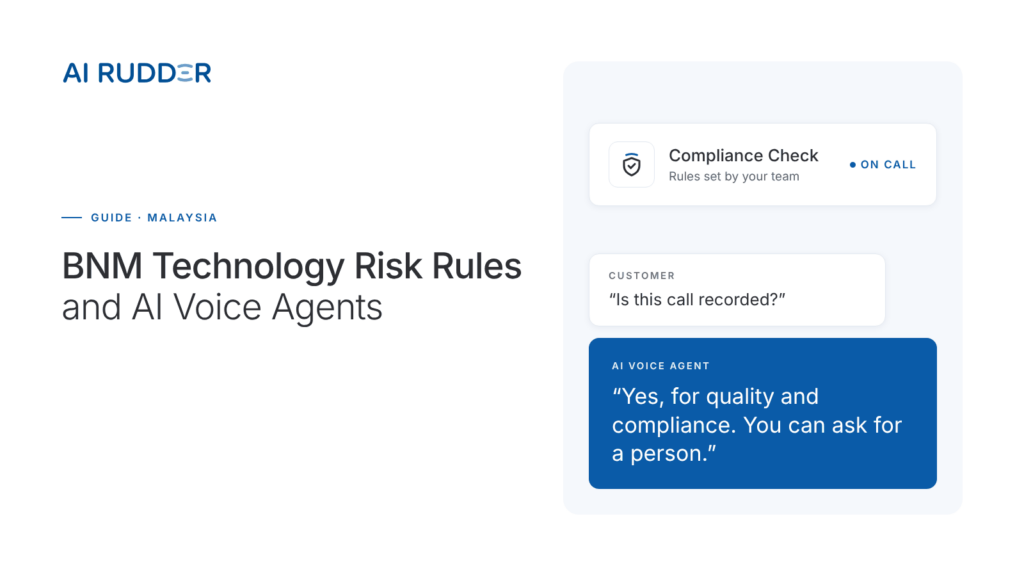
Yes, when the bank manages its voice AI with the same controls it applies to other customer-facing technology services. Bank Negara Malaysia's Risk Management…
November 16, 2026
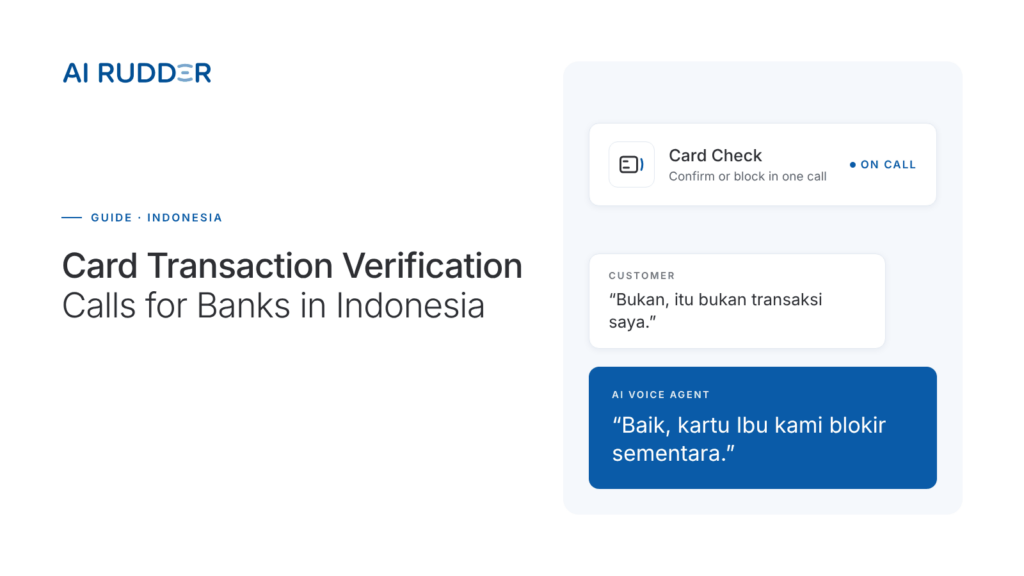
Banks in Indonesia automate card transaction verification calls by connecting their fraud detection system to an AI voice agent. When a card payment looks…
November 16, 2026