
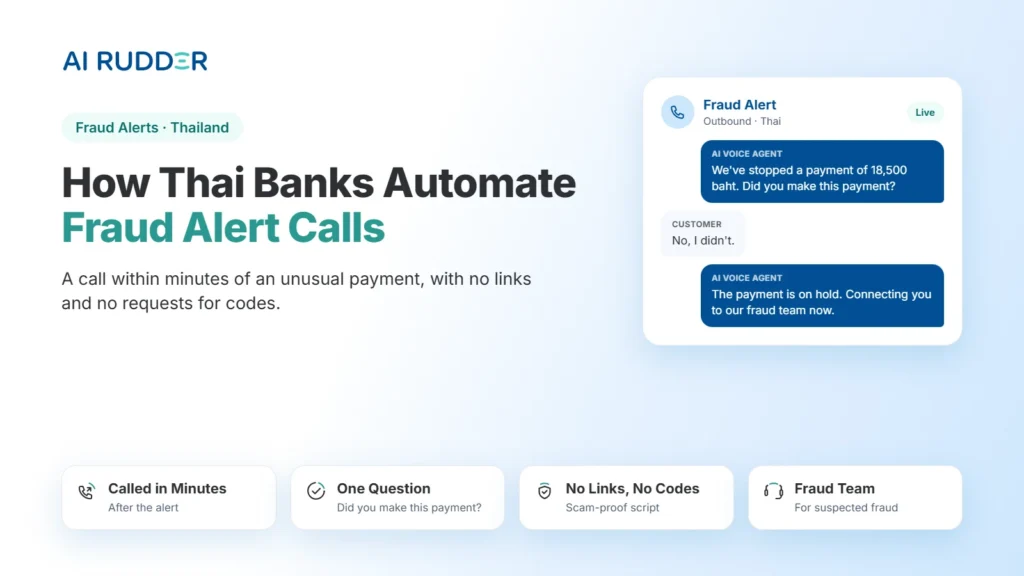
How Thai Banks Automate Fraud Alert Calls With AI
Banks in Thailand automate transaction verification by having an AI voice agent call the customer as soon as a payment looks unusual, confirm whether…
November 4, 2026
Nov 04, 2026 posted by Ming
A telco should look for voice AI that handles its high-volume, repetitive calls end to end, such as billing reminders, payment confirmations, service updates and plan questions, and hands everything else to people with the call history attached. It also needs to cope with peak volumes after outages and billing runs, and follow local calling and data rules.
Telcos make and receive more customer calls than almost any other industry. Most of those calls follow a handful of patterns, which is why they suit AI voice agents.
Outbound billing and payment reminders. Confirm the amount, the due date and how to pay.
Overdue account calls. Remind customers before a service is suspended, and record a promise to pay.
Service and installation updates. Confirm appointment times and tell customers what to expect.
Plan and package questions. Answer common questions and pass upgrade requests to sales.
Outage information. Answer the surge of calls after a network incident with the latest status.
Calls involving disputes, complaints, cancellations and technical faults that need diagnosis stay with people.
CBN, an ICT and telecommunications provider in Indonesia, uses AI-assisted automation for outbound customer communications. According to its case-study page, CBN handles 150,000 to 200,000 records a month, reaches an average 27% connection rate, and sees 6–10% of connected customers complete the collection outcome. It reports manual workload and operational costs down 50–70% and productivity up 100–200%.
Step 1: Map your call types by volume. Rank inbound and outbound calls by monthly volume and by how predictable they are.
Step 2: Start with one outbound flow. Billing or overdue reminders are usually the fastest to launch and the easiest to measure.
Step 3: Check peak capacity. Ask how many calls the system can run at once, and test it with a simulated billing day or outage.
Step 4: Test the language. Use recordings of your own customers, including regional accents.
Step 5: Connect your systems. The agent needs billing and account data to answer questions, and must write results back to your CRM.
Step 6: Define the handoffs. Complaints, cancellations and technical faults go to people with the call attached.
Step 7: Review every call. Automated Quality Assurance scores calls against your scripts and rules.
AI voice agent: Good afternoon, this is the virtual assistant from your internet provider. Am I speaking with Ibu Rina?
Customer: Yes.
AI voice agent: Thank you. Your bill for October is 385,000 rupiah and is due on 10 November. Would you like me to send the payment details by message?
Customer: Yes, please. And can I change my package?
AI voice agent: I’ll send the payment details now. For package changes, I’ll connect you with our sales team, who can see your current plan.
The agent handles the reminder and passes the upgrade request to people, with the call summary.
Compare these with your current process on a matched group of customers before scaling.
Starting with the hardest calls. Technical support is complex. Start with billing and reminders.
No integration. An agent that can’t see the bill can only read a script.
Ignoring peaks. Outage days are when customers need answers fastest.
Unclear opt-outs. Customers must be able to stop calls and reach a person.
Telcos also hold large amounts of personal data, so ask where recordings and transcripts are stored and for how long. AI Rudder is built to meet SOC 2 and ISO 27001, alongside GDPR and PDPA requirements, runs AI voice agents in 22 markets and has executed more than 80 billion AI calls.
Can voice AI handle telecom customer service? Yes, for predictable calls such as billing, payments, service updates and plan questions. Complex faults and complaints stay with people.
What results has a telco seen? CBN reports a 27% average connection rate and manual workloads and operational costs down 50–70%.
How quickly can a telco start? Most start with one outbound flow, such as billing reminders, and add call types once it meets its targets.
Does voice AI replace telecom agents? It takes the repetitive calls, so agents can focus on complaints, retention and technical issues.
Rank your top five call types by volume. Get a Demo and we’ll show you which ones an AI voice agent could take first.
Banks in Thailand automate transaction verification by having an AI voice agent call the customer as soon as a payment looks unusual, confirm whether…
November 4, 2026
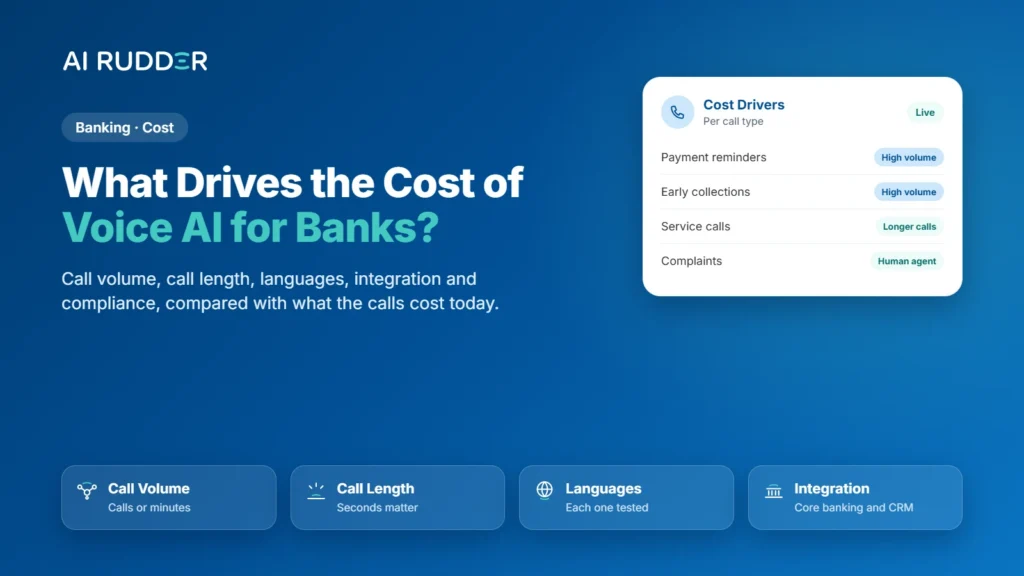
The cost of voice AI for a bank depends on five things: how many calls it makes or answers, how long those calls last,…
November 4, 2026
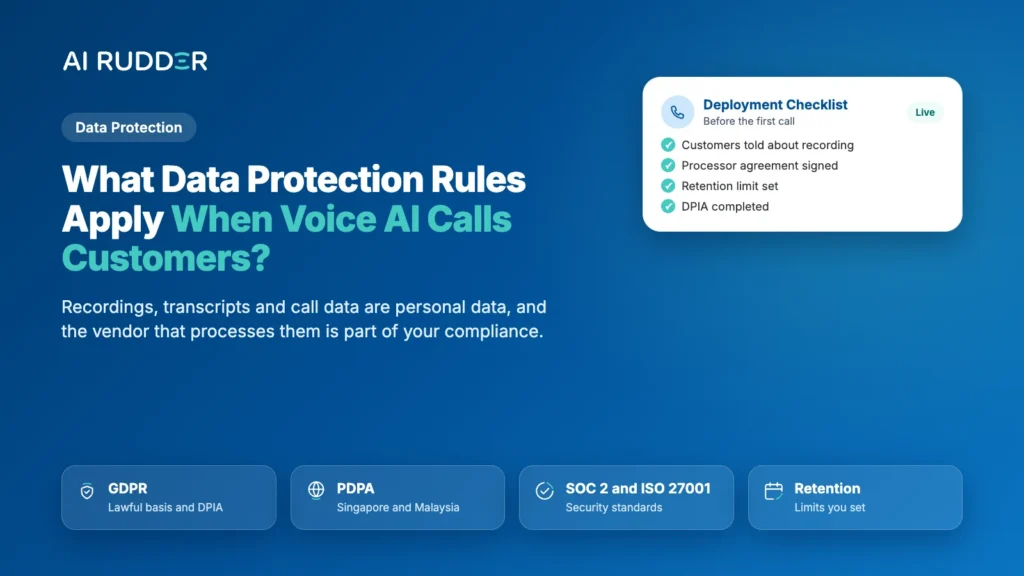
What data protection rules apply when voice AI calls your customers? All of the call data falls under data protection law, and the vendor…
November 4, 2026