
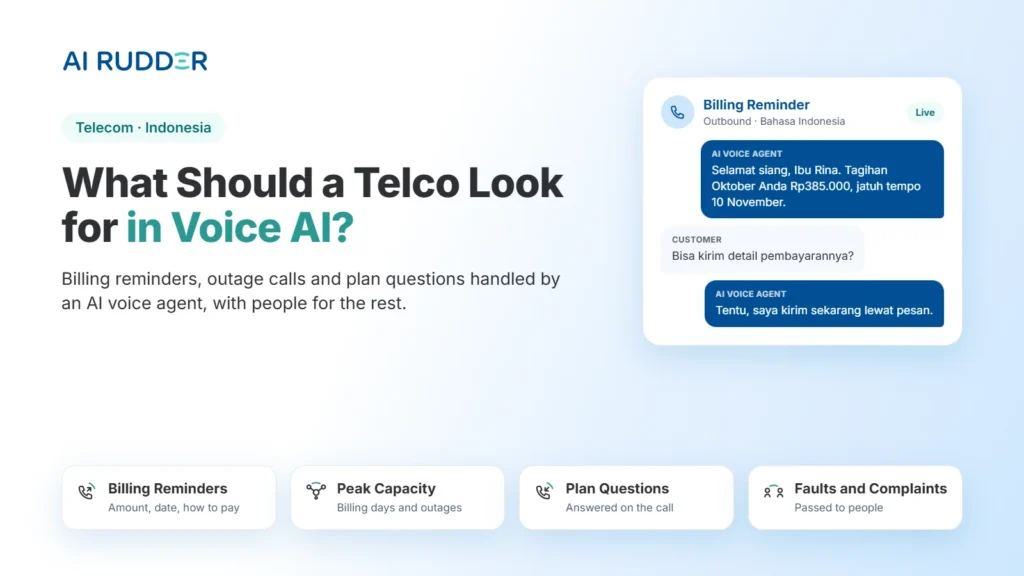
What Should a Telco Look for in Voice AI?
A telco should look for voice AI that handles its high-volume, repetitive calls end to end, such as billing reminders, payment confirmations, service updates…
November 4, 2026
Nov 04, 2026 posted by Ming
Banks in Thailand automate transaction verification by having an AI voice agent call the customer as soon as a payment looks unusual, confirm whether the customer made it, and pass suspected fraud straight to the bank’s fraud team. The calls have to follow Thailand’s anti-scam rules: banks don’t send links by SMS, and customers must never be asked for passwords or one-time codes.
Thailand has tightened its fight against online and phone scams since 2023, and speed now matters. A verification call made within minutes can stop money leaving the account.
This article summarises published regulation and legal commentary. It is not legal advice. Confirm current requirements with your legal and compliance teams.
The technology crime decree. The Royal Decree on Measures for Protection and Suppression of Technology Crimes B.E. 2566 (2023) took effect on 17 March 2023, according to Tilleke & Gibbins. Banks must freeze a transaction for 72 hours when a victim reports it, by phone or electronically, and can hold suspicious transactions they detect for seven days. They also share information on suspect accounts with the authorities.
Bank of Thailand measures. On 9 March 2023, the Bank of Thailand announced that banks would stop sending SMS messages with links, and that banks must run a fraud hotline 24 hours a day, seven days a week.
What’s next. In October 2026 the Bank of Thailand released a draft notification on digital channel security that would phase out SMS and email one-time passwords for key transactions and require facial verification for high-value transfers. It is still a draft.
Flagging an unusual transaction. The bank’s fraud system.
Calling the customer within minutes. AI voice agent.
Confirming “Did you make this payment?” AI voice agent.
Freezing a transaction the customer didn’t make. The bank’s systems, triggered by the call result.
Talking to a distressed fraud victim. The fraud team.
Step 1: Connect the fraud system. Each alert triggers a call with the transaction details.
Step 2: Write a short, scam-proof script. The agent states the bank’s name, the amount and the merchant, and asks one question: did you make this payment? It never asks for passwords, one-time codes or card numbers, and says so.
Step 3: Act on the answer. “Yes” releases the transaction. “No” freezes it and connects the customer to the fraud team.
Step 4: Handle no-answers. Retry, then send an in-app notification. Don’t send SMS links.
Step 5: Speak Thai naturally. Use polite forms of address and test with recordings of your own customers.
Step 6: Record every call. Recordings support police reports and dispute handling.
AI voice agent: Hello, this is the fraud team at your bank. We will never ask for your password, PIN or one-time code. We’ve stopped a payment of 18,500 baht to an online merchant a few minutes ago. Did you make this payment?
Customer: No, I didn’t.
AI voice agent: Thank you. The payment is on hold. I’m connecting you to a fraud specialist now, who will help you secure your account.
If the customer had said yes, the agent would have released the payment and ended the call.
Freezing reported transactions. Thailand: 72 hours on a victim’s report, extended to seven days after a police complaint. United States: No single federal freeze rule.
Links in SMS. Thailand: Banks agreed to stop sending them (March 2023). United States: No federal ban.
Fraud hotline. Thailand: 24/7 hotline required. United States: Card network and bank rules.
AI voices on calls. Thailand: Same rules as any bank call. United States: FCC ruling (Feb 2024): AI-generated voices fall under the TCPA.
Sounding like a scammer. Customers hang up on calls that ask for codes or send links.
Slow calls. A call an hour after the alert is often too late.
No human route. Fraud victims need a person quickly.
Unclear caller identity. Tell customers how to check the call is genuine, for example by calling the number on the back of their card.
AI Rudder has an office in Thailand, runs AI voice agents in 22 markets and has executed more than 80 billion AI calls. It is built to meet SOC 2 and ISO 27001, alongside GDPR and PDPA requirements, and call data falls under Thailand’s PDPA.
Can AI voice agents make fraud alert calls? Yes. They can call within minutes of an alert and confirm whether the customer made the transaction.
Should a verification call ask for a one-time password? No. Legitimate bank calls never ask for passwords or codes.
Can Thai banks send links by SMS? Thai banks agreed in March 2023 to stop sending SMS messages with links.
How long can a Thai bank freeze a reported transaction? For 72 hours after a victim’s report, extended to seven days once a police complaint is filed.
List the fraud alerts your team calls about today. Get a Demo and we’ll show you how an AI voice agent would make those calls, in Thai.
A telco should look for voice AI that handles its high-volume, repetitive calls end to end, such as billing reminders, payment confirmations, service updates…
November 4, 2026
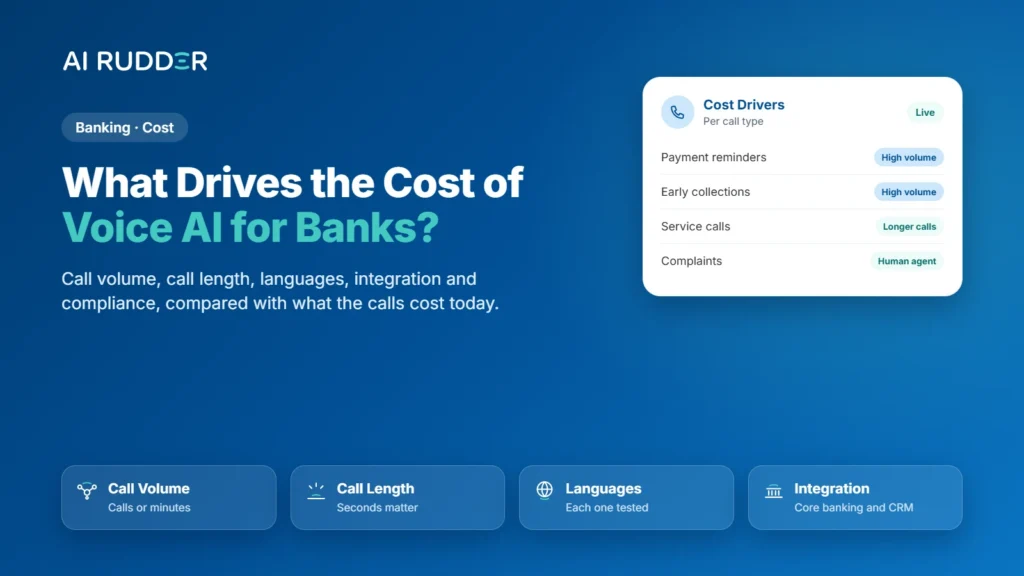
The cost of voice AI for a bank depends on five things: how many calls it makes or answers, how long those calls last,…
November 4, 2026
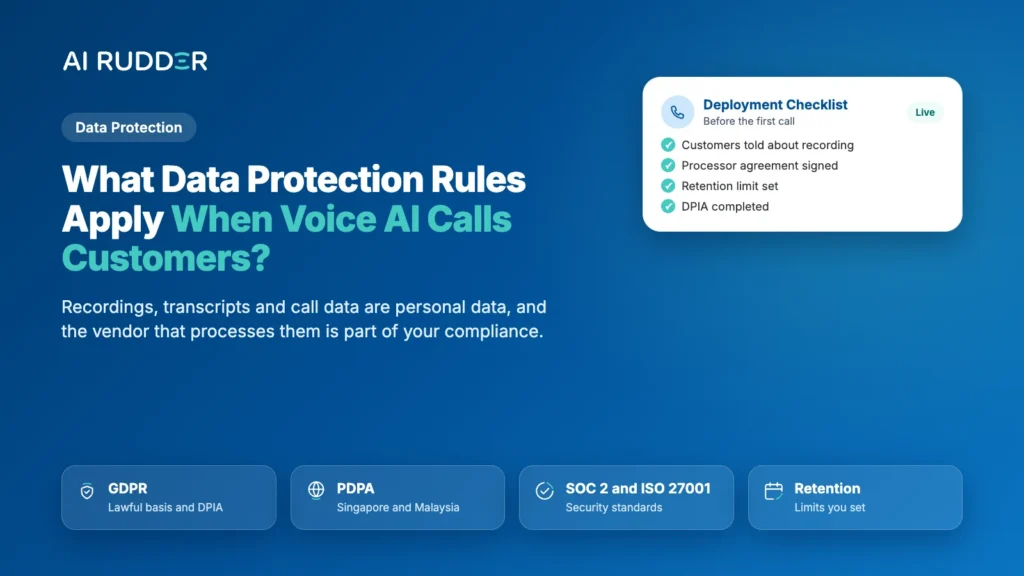
What data protection rules apply when voice AI calls your customers? All of the call data falls under data protection law, and the vendor…
November 4, 2026